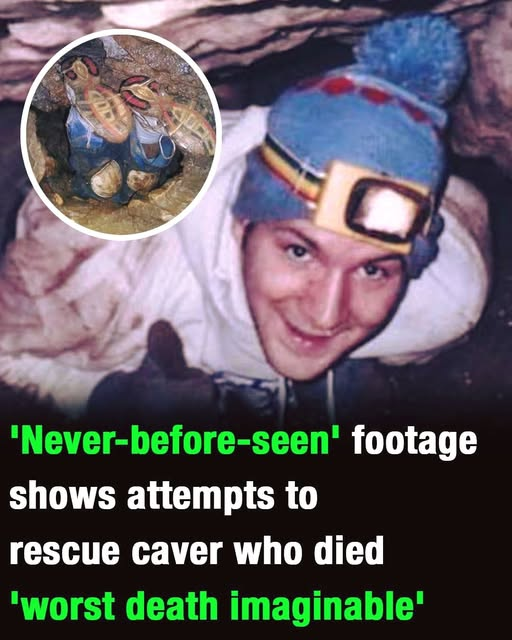
In the world of cave exploration, few stories have left as deep an impact on both the caving community and the general public as the tragic death of John Edward Jones. What began as a recreational underground expedition in Utah in 2009 turned into a devastating accident that highlighted both the beauty and the extreme dangers of narrow cave systems. Years later, the incident remains one of the most widely discussed cave rescue tragedies in modern history. John Edward Jones was a 26-year-old medical student, husband, and father.
By all accounts, he was intelligent, physically active, and deeply devoted to his family. Alongside his loved ones and friends, he enjoyed outdoor adventures, including hiking, climbing, and cave exploration. Like many enthusiasts of underground exploration, he was drawn to the challenge, mystery, and excitement that cave systems can offer. On November 24, 2009, John joined a group of family members and friends for what was meant to be a routine exploration of Nutty Putty Cave, located in Utah County near Utah Lake.
The cave was known among spelunkers for its complex network of narrow passageways, tight squeezes, and winding underground tunnels. It had been explored by thousands of people over the years, but it was also considered dangerous enough that it had been closed to the public in the past due to safety concerns.
Despite its risks, Nutty Putty Cave remained a popular site for experienced cavers. Its passages required careful navigation, body awareness, and a strong understanding of spatial movement. Many of its tunnels were extremely tight, demanding both physical endurance and mental composure.
John and his group entered the cave expecting a challenging but familiar adventure. At some point during the exploration, John separated slightly from the main group while searching for a less-traveled section of the cave. In doing so, he mistakenly entered a narrow, unmapped passage that resembled part of the cave’s known structure but was significantly more confined.
This decision would ultimately change everything.
The passage John entered gradually narrowed into an extremely tight vertical fissure. Estimates suggest the opening was approximately 10 inches high and 18 inches wide—barely enough space for a human body to pass through even under ideal conditions. Believing he could push through and eventually turn around, John attempted to navigate the tight space headfirst.
However, as he moved forward, gravity began working against him. His body slid deeper into the narrow crack, and soon he became fully wedged in a head-down position. In this orientation, he was unable to reverse his movement. The shape of the passage made it impossible to push upward or rotate his body.
At this point, John became trapped in a position that would prove nearly impossible to escape without external assistance.
As soon as his companions realized what had happened, they immediately attempted to help him. They tried pulling him back using a rope, but the angle and pressure of the cave walls made extraction extremely difficult. Each attempt to pull him out caused him to slide deeper into the narrow crevice.
Recognizing the severity of the situation, they called emergency services.
What followed was one of the most complex cave rescue operations in Utah’s history.
Rescue teams from local fire departments, search and rescue units, and experienced cave rescue specialists were dispatched to the scene. Upon arrival, they faced a major challenge: the location of John’s body was deep within a narrow, unstable section of the cave system that could only be accessed by crawling through extremely tight passages.
The rescue effort required responders to carry specialized equipment deep underground. This included rope systems, pulleys, communication devices, lighting equipment, and tools designed for confined-space rescue operations. Every movement inside the cave had to be calculated carefully due to the risk of further destabilizing the environment.
Rescuers worked in rotating shifts, crawling through narrow tunnels for hours at a time. Many of them had to squeeze through passages only slightly larger than the one that trapped John. The physical and psychological strain on the teams was immense, as they worked in complete darkness, surrounded by rock walls that allowed almost no margin for error.
Communication between John and rescuers was maintained intermittently. At times, he was conscious and able to speak, though his condition deteriorated over time due to his inverted position. Being trapped upside down placed significant strain on his body, affecting circulation and breathing.
One of the most challenging aspects of the rescue was the angle of his position. Traditional vertical extraction methods were nearly impossible due to the narrowness of the passage. Engineers and rescue experts attempted to design pulley systems that could shift his body upward, but the cave’s structure limited the effectiveness of these strategies.
As hours passed, rescuers made repeated attempts to reposition him, but each effort was hindered by the tight environment and the difficulty of securing proper anchor points within the cave walls. The unstable nature of the passage added additional risk, making every movement potentially dangerous for both John and the rescuers.
Despite the extreme conditions, the rescue teams continued working tirelessly for nearly 27 hours. Their efforts represented a coordinated attempt involving physical endurance, technical expertise, and emotional resilience under extremely stressful conditions.
Unfortunately, as time progressed, John’s condition worsened. The prolonged inverted position placed severe stress on his body, and rescue efforts were ultimately unable to extract him safely in time. He was pronounced dead inside the cave during the ongoing operation.
The recovery process itself presented another difficult decision. Due to the extremely narrow passage and the risks involved in further excavation, authorities determined that retrieving his body would be too dangerous and could result in additional casualties. After careful assessment, it was decided that his body would remain in the cave.
Shortly after the incident, Nutty Putty Cave was permanently sealed to prevent future tragedies. A memorial plaque was placed at the entrance to honor John Edward Jones and acknowledge the seriousness of the event.
The decision to seal the cave was made not only out of respect for John and his family, but also as a preventive measure. Authorities recognized that the cave’s structure posed significant risks even for experienced explorers, and reopening it could have led to additional accidents.
The tragedy had a profound impact on the caving community worldwide. It became a case study in cave safety, navigation awareness, and the importance of respecting unmapped or unstable underground environments. Training programs for cave rescue operations have since referenced the incident to improve response strategies in confined-space emergencies.
John Edward Jones’ story also became widely known beyond the caving community. It has been discussed in documentaries, educational materials, and safety analyses that aim to highlight the risks associated with cave exploration. While some media coverage has dramatized aspects of the event, the core facts remain a sobering reminder of how quickly an adventurous activity can turn into a life-threatening situation.
For his family, the loss was immeasurable. John was remembered as a loving husband and father, as well as someone who embraced life with curiosity and enthusiasm. His story continues to be shared not for sensationalism, but as a reminder of the importance of caution, preparation, and respect for natural environments.
Today, the Nutty Putty Cave incident stands as one of the most well-known cave rescue tragedies in modern history. It continues to be referenced in discussions about outdoor safety, emergency response coordination, and the unpredictable nature of underground exploration.
Above all, the story of John Edward Jones serves as a lasting reminder that even experienced and careful adventurers can encounter unforeseen dangers in environments that leave little room for error. His legacy remains tied to lessons about preparation, risk awareness, and the importance of respecting the natural limits of exploration.