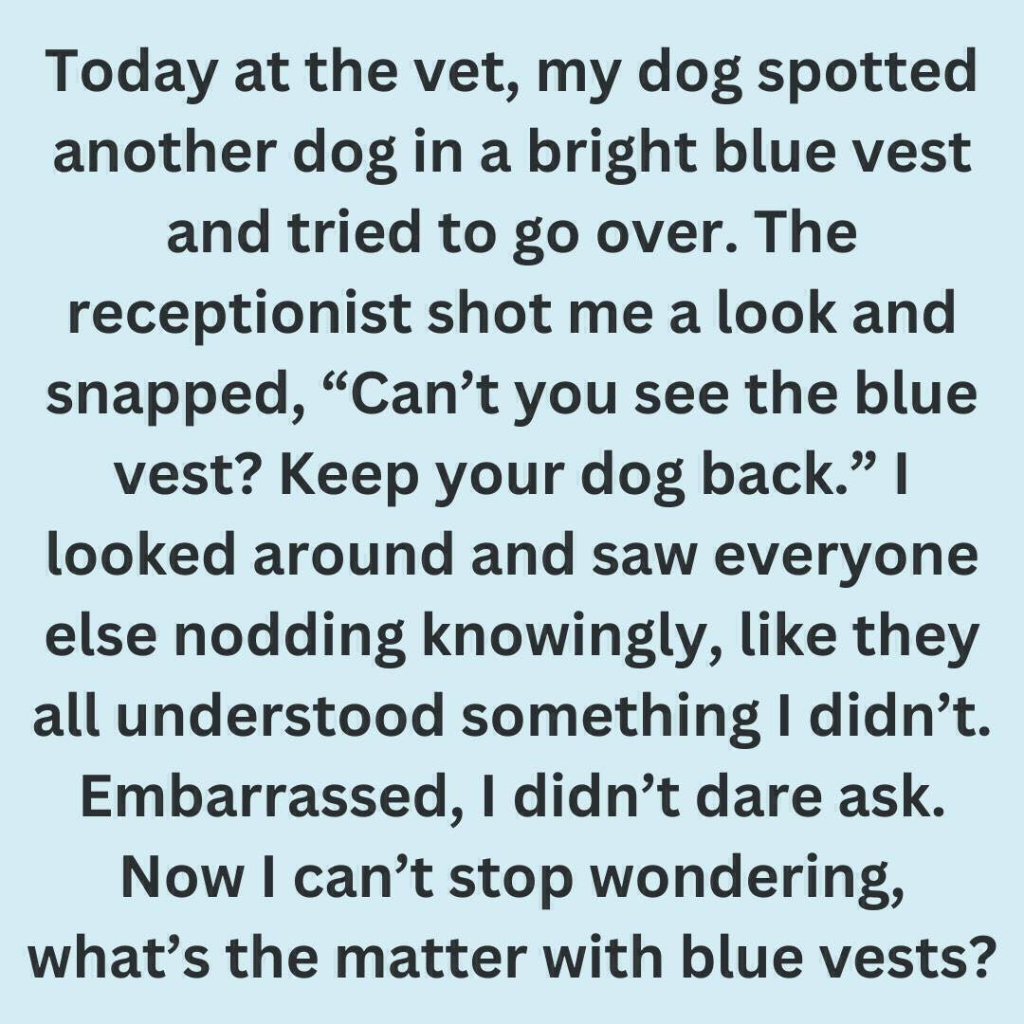
Dogs have long served as companions, protectors, and highly trained partners in human society. While many are family pets enjoying neighborhood walks, others perform life-sustaining tasks that demand concentration, discipline, and public cooperation. One of the simplest yet most powerful tools used to communicate a working dog’s role is color-coded gear. A vest, harness, leash wrap, or collar in a specific color can instantly signal that a dog is not merely out for exercise but actively performing essential duties. Among these colors, blue has increasingly become associated with service dogs and dogs in training, though other shades—such as red, yellow, and green—also carry meaningful messages.
Understanding what these colors represent is more than a matter of curiosity; it is a matter of safety, accessibility, and respect. When communities recognize and honor these visual cues, they help ensure that working dogs can perform their responsibilities without unnecessary interruption, allowing handlers to maintain independence and security in daily life.
Blue gear is most commonly linked to service dogs or service dogs in training. These animals are trained to perform specific tasks for individuals with disabilities, including visual impairment, mobility challenges, seizure disorders, diabetes, PTSD, and other medical or psychiatric conditions. A guide dog leading a visually impaired handler across a busy intersection, for instance, must remain focused at all times. Similarly, a medical alert dog trained to detect drops in blood sugar or oncoming seizures cannot afford distraction.
When a dog wearing blue gear is approached, called, or petted without permission, even a brief lapse in concentration can interfere with its duties. In high-stakes situations—such as navigating traffic or alerting to a medical emergency—disruption could pose serious risks. For dogs in training, interruptions can delay progress, reinforce undesirable behaviors, or undermine carefully structured learning environments.
In some contexts, therapy dogs may also wear blue, though their roles differ from service dogs. Therapy dogs typically visit hospitals, nursing homes, schools, or disaster relief sites to provide comfort and emotional support. While they do not have the same public access rights as service dogs under federal law, their work still requires calm focus and structured interaction. Recognizing their gear and asking handlers before engaging helps maintain safe, positive experiences for everyone involved.
Beyond blue, other colors serve important communicative functions. Yellow is widely used to signal that a dog needs space. This may indicate anxiety, ongoing behavioral training, recovery from surgery, or reactivity toward unfamiliar people or animals. The “Yellow Dog Project,” for example, has promoted awareness of yellow leashes and ribbons as indicators that a dog should not be approached. When the public respects this signal, it prevents unnecessary stress and potential incidents.
Red gear often conveys that a dog is actively working and should not be disturbed. While red can sometimes signal caution, it is frequently used simply to emphasize that the dog’s attention must remain on its handler. Green may suggest that a service dog is in early training or that interaction may be permitted with handler approval. Some organizations utilize orange or purple to denote specialized roles such as scent detection, advanced training programs, or therapy certification.
Importantly, these color systems are not legally standardized at the federal level. Different training organizations and handlers may adopt varying conventions. However, the growing consistency across programs has made these colors increasingly recognizable to the public. The more widely understood they become, the more effective they are as tools for communication.
Legal protections reinforce the importance of recognizing working dogs. In the United States, the Americans with Disabilities Act (ADA) grants service dogs access to public spaces where pets are typically prohibited, including restaurants, stores, hotels, and public transportation. Businesses may ask limited questions to determine whether a dog qualifies as a service animal, but they cannot require proof of certification. Because official documentation is not mandatory, visual identifiers such as vests and patches help reduce confusion and foster smoother interactions.
However, gear alone does not grant legal status. A dog’s designation as a service animal depends on its training and the tasks it performs for a person with a disability—not on the color of its vest. That said, clear labeling and consistent color usage can prevent misunderstandings, reduce confrontations, and promote awareness among those unfamiliar with service animal laws.
Distraction remains one of the most significant risks to working dogs. Common behaviors—such as making eye contact, using baby talk, whistling, offering treats, or allowing another dog to approach—may seem harmless but can compromise training and safety. Even positive attention can redirect a dog’s focus at a critical moment. The most respectful approach is simple: avoid interaction unless the handler explicitly invites it.
Teaching children about working dog etiquette is particularly important. Young people are naturally drawn to dogs, and early education about vest colors and respectful behavior fosters empathy and awareness. Schools, community centers, and public campaigns can play a valuable role in spreading this knowledge.
Modern technology has further enhanced visual communication. Many vests now include reflective strips for nighttime visibility, clearly printed patches stating “Do Not Pet” or “Service Dog,” and even QR codes that provide educational information. While these additions are helpful, the core principle remains unchanged: visual signals exist to protect the dog’s concentration and the handler’s well-being.
Communities that embrace this understanding create more inclusive environments. When bystanders recognize blue gear as a sign of focused service work, yellow as a request for space, and red as an indication not to disturb, they contribute to safer shared spaces. This awareness reduces anxiety for handlers, prevents accidental interference, and reinforces the legitimacy of working dog teams.
Ultimately, gear colors function as a silent language. Blue frequently represents service roles or structured training. Yellow asks for distance. Red emphasizes active work. Green and other colors provide additional nuance depending on organizational standards. While not universally codified, these signals are increasingly recognized as practical tools for public education and safety.
Every working dog wearing specialized gear represents hours—often years—of dedicated training. Behind each vest is a partnership built on trust, skill, and mutual reliance. By learning to interpret and respect these visual cues, communities affirm that partnership and support the independence of individuals who rely on canine assistance.
In a world where small gestures can make profound differences, something as simple as noticing the color of a dog’s vest—and choosing not to distract—can help protect lives, preserve training, and strengthen the bond between humans and their most devoted working companions.