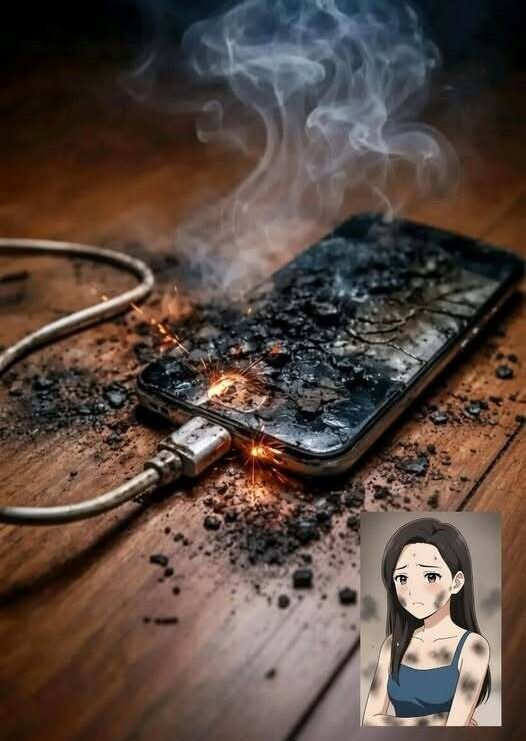
The phrase “never put the charger like this” may sound simple, but it carries a serious warning that many people overlook in their daily routines. Charging a phone has become such a normal habit that it rarely raises concern, yet improper charging practices are responsible for thousands of fires and damaged devices every year. Images of burned phones, melted cables, and smoke-filled rooms are not exaggerations—they reflect real incidents caused by small mistakes that could have easily been avoided. In a world where smartphones are always within reach, understanding how to charge them safely is no longer optional but essential.
At the center of this risk are lithium-ion batteries, the same technology that allows modern phones to store large amounts of energy in a compact space. While highly efficient, these batteries are sensitive to heat, pressure, and electrical instability. When a phone is charged using a damaged cable, placed on a soft surface like a bed, or covered during charging, heat can build up quickly. This can trigger a process known as thermal runaway, where the battery overheats uncontrollably, leading to smoke, fire, or even explosion. What begins as a minor oversight—like charging under a pillow—can escalate into a dangerous situation within minutes.
Many users unknowingly increase these risks through everyday habits. Using cheap or uncertified chargers, bending cables repeatedly, or continuing to use visibly damaged wires are among the most common causes of charging-related accidents. Charging overnight without proper airflow is another widespread habit that can lead to overheating. Soft surfaces such as mattresses, couches, or blankets trap heat and prevent the device from cooling down, creating the perfect environment for failure. Even something as simple as placing a phone in direct sunlight while charging can significantly raise its temperature and increase the danger.
The consequences of improper charging go beyond physical damage to the device. A single incident can result in house fires, injuries, and significant financial loss. Replacing a smartphone is costly, but the loss of personal data—photos, documents, and memories—can be even more devastating. In some cases, insurance claims may be denied if the damage is linked to negligence, leaving individuals to cover the full cost themselves. Additionally, burned electronics contribute to environmental waste, releasing harmful materials that impact both health and the environment.
Preventing these risks starts with simple but consistent habits. Always use original or certified chargers that meet safety standards. Regularly inspect cables for signs of wear, such as fraying or exposed wires, and replace them immediately if damaged. Charge your phone on a hard, flat surface with enough space for proper airflow, and avoid placing it on flammable materials. Never charge your phone under a pillow, blanket, or inside enclosed spaces. If possible, avoid leaving your device charging unattended for long periods, especially overnight.
Understanding the science behind these risks helps reinforce the importance of these precautions. Lithium-ion batteries operate safely within a specific temperature range, and exceeding that range increases the likelihood of failure. Fast charging, while convenient, generates additional heat and requires even more attention to proper usage. Modern devices include safety systems, but they cannot compensate for poor habits or faulty accessories. In many reported cases, the root cause was not the phone itself, but how it was used.
In the end, safe charging is about awareness and responsibility. The small effort required to follow proper practices can prevent serious consequences that affect not only your device but your home and personal safety. Charging your phone should never be treated as a thoughtless routine. By making smarter choices and avoiding risky habits, you ensure that your technology remains a tool for convenience—not a hidden danger waiting to ignite.