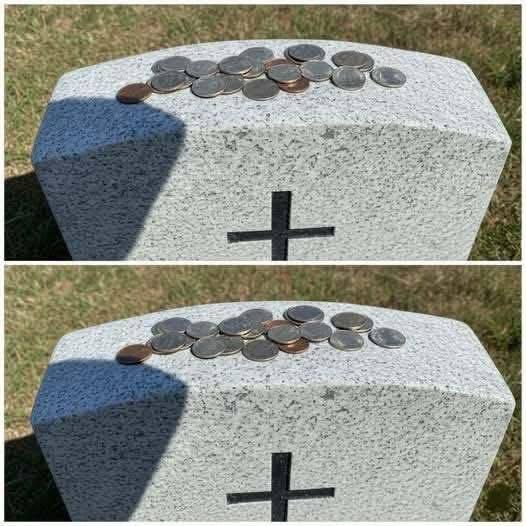
On a quiet morning in a cemetery, you might notice a small but powerful gesture: a single coin resting on a gravestone. To a passerby, it may seem insignificant, yet for many — especially within the military — it carries deep meaning. Leaving a coin is not about money; it is about connection, a silent way to express remembrance, gratitude, and respect without speaking a word.
This tradition has ancient origins. In Rome, mourners placed coins with the dead as offerings to Charon, the mythical ferryman guiding souls across the River Styx. Though the symbolism has changed, the act of leaving a coin has always represented care for the departed and acknowledgment of their journey.
Centuries later, the tradition resurfaced during the Vietnam War. In a time marked by conflict and division, soldiers began leaving coins on the graves of fallen comrades. It became a quiet message: “I remember you.” The gesture allowed respect and unity to be expressed without conversation, politics, or misunderstanding — a simple, wordless salute.
Each type of coin carries a specific meaning. A penny says, “I visited,” a small but sincere act of remembrance. A nickel signifies shared boot camp training, a bond formed at the beginning of service. A dime means the visitor served with the fallen soldier. And a quarter carries the deepest message of all — that the visitor was present when the individual gave their life.
These coins become more than metal; they turn into symbols of loyalty, sacrifice, and lasting connection. Each one tells a story, even when no words are spoken.
Today, the custom extends beyond the military. Many people leave coins on the graves of loved ones as a gesture of gratitude, peace, and remembrance.
Whether placed on polished marble or weathered stone, these simple tokens carry a message that endures: respect lives on, and memory never fades.