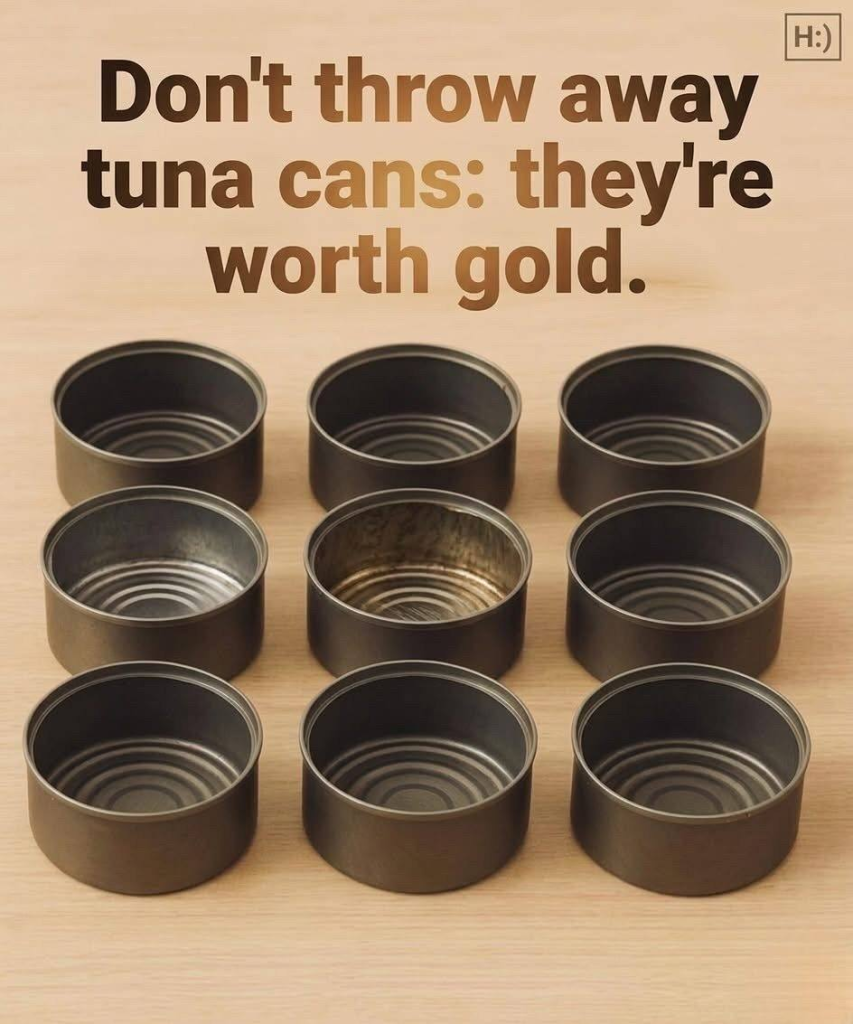
How many times have you thrown away dozens of tuna cans without a second thought? Next time, pause and consider reusing them—they are more valuable than you might realize. Canned tuna is a staple for many households, praised for its omega-3 fatty acids and convenience. Nutritionists recommend it, and millions of people buy it daily to enjoy a quick, healthy meal. But once the tuna is gone, the can is usually tossed aside.
Empty tuna cans, however, can be cleverly repurposed for a variety of household uses. Instead of discarding them, you can transform these small containers into practical and decorative items. With a little creativity, a humble can becomes much more than just packaging—it can become a resource for organization, decoration, and fun.
One of the simplest ideas is to turn tuna cans into flower pots. Small plants, such as succulents or miniature cacti, fit perfectly inside. You can decorate the cans using clothespins or paint to add a personal touch, making charming, inexpensive pots for your windowsill or desk.
Tuna cans can also be used as candle holders. By placing a candle inside a glass within the can, you can safely display it without damaging the tin. Decorate with clothespins or other materials for a rustic, creative look that brightens any room.
In the kitchen, tuna cans can serve as molds for individual desserts, small stews, or puddings. Simply clean the cans thoroughly and remove labels before using. Their compact size makes them ideal for crafting perfectly shaped portions that are visually appealing and practical for serving.
For children’s crafts, tuna cans can become fun DIY projects like rattles or hanging decorations. By threading string through multiple cans and suspending them, kids can enjoy tactile and auditory play. More advanced crafters can even transform tuna cans into a wall clock by adding a clock mechanism. With a little imagination, the possibilities for reusing tuna cans are endless.