Part 1
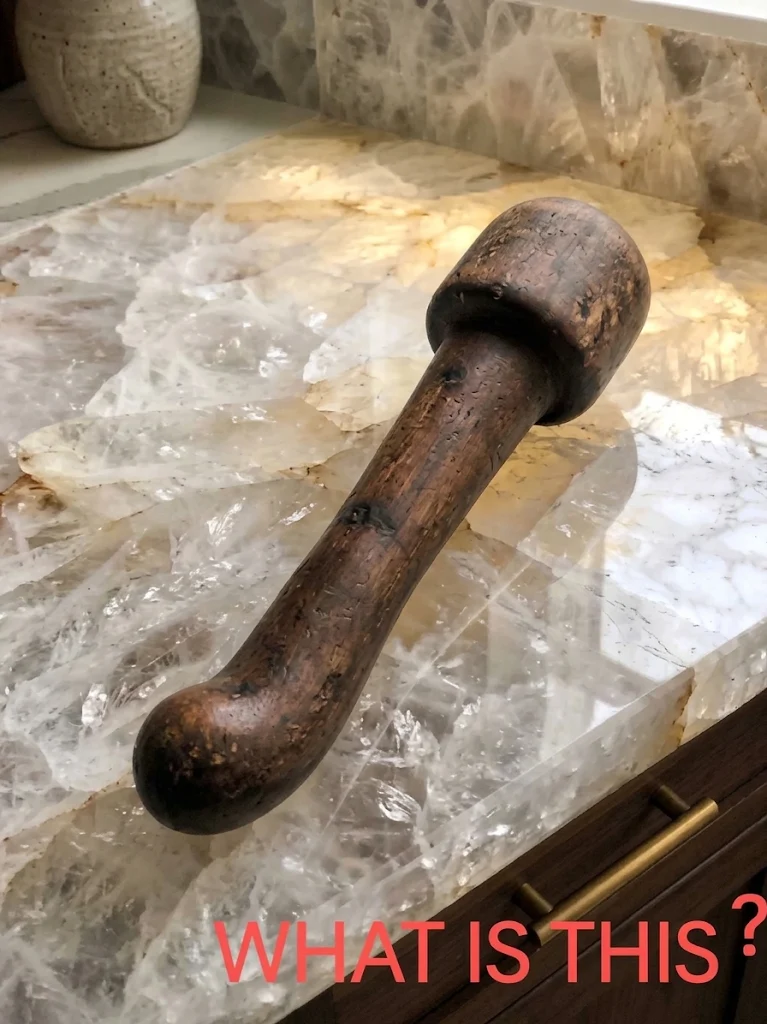
At first glance, this old wooden tool could easily be mistaken for something from a workshop rather than a kitchen. Its curved handle, rounded end, and sturdy construction seem unusual by modern standards. But before electric appliances became common, households depended on simple hand-operated utensils for almost every stage of preparing a meal. Tools like this were valued because they could accomplish demanding kitchen tasks using nothing more than strength and repetition.
The rounded end was designed to press firmly against soft ingredients while the handle provided a secure grip. One of its most likely jobs involved a food that appeared on countless family dinner tables: boiled potatoes. Once the potatoes became tender, someone could repeatedly press the wooden tool into them until they broke apart and developed a smooth, soft texture. But there was more to this mysterious utensil than simply crushing potatoes, and its true versatility becomes clearer when you understand how older kitchens worked…
Similar wooden tools could be used with many soft foods. Cooked vegetables, fruits, and other ingredients could be pressed, crushed, or softened using the same basic motion. Depending on its exact shape, the utensil could even perform a job similar to a primitive pestle, allowing cooks to prepare ingredients without specialized equipment.
The simplicity was part of its appeal. There were no motors to maintain, batteries to replace, or complicated mechanisms that could break. A sturdy hardwood tool could withstand years of repeated use, especially when it was cleaned and stored properly after each meal.
For families preparing food by hand, that durability mattered. One well-made utensil could remain in a kitchen for decades and eventually be passed from one generation to another. Its appearance might have been ordinary to the people who used it every day, but today it can seem surprisingly mysterious.
Modern kitchens have changed dramatically. Electric mixers, food processors, blenders, and specialized mashers can now accomplish similar tasks in a fraction of the time. Yet the basic principle behind this old tool remains remarkably simple: pressure transforms soft ingredients into a completely different texture.
The mystery becomes much easier to solve once the rounded end and handle are considered together. This was essentially an antique potato masher or primitive pestle, designed to crush soft foods by hand. Potatoes were probably among its most familiar uses, particularly after they had been boiled until tender.
Imagine preparing dinner before electric appliances were available. Potatoes would be cooked, transferred into a bowl, and then worked repeatedly with the wooden utensil. Each downward motion broke the potatoes apart. With enough effort, the rough pieces became a soft mixture ready to be served with the rest of the meal.
Its usefulness wasn’t limited to one recipe. The same basic tool could help crush cooked vegetables, soften fruit, or process other ingredients that needed to be broken down. That versatility explains why such a seemingly simple object could earn a permanent place in a household kitchen.
Today, holding one of these tools can feel like holding a small piece of everyday history. It reminds us that cooking once required more physical effort and patience than it often does now. There was nothing electronic about it, and that was precisely the point. A piece of durable wood, a strong grip, and a little persistence could turn basic ingredients into dinner.