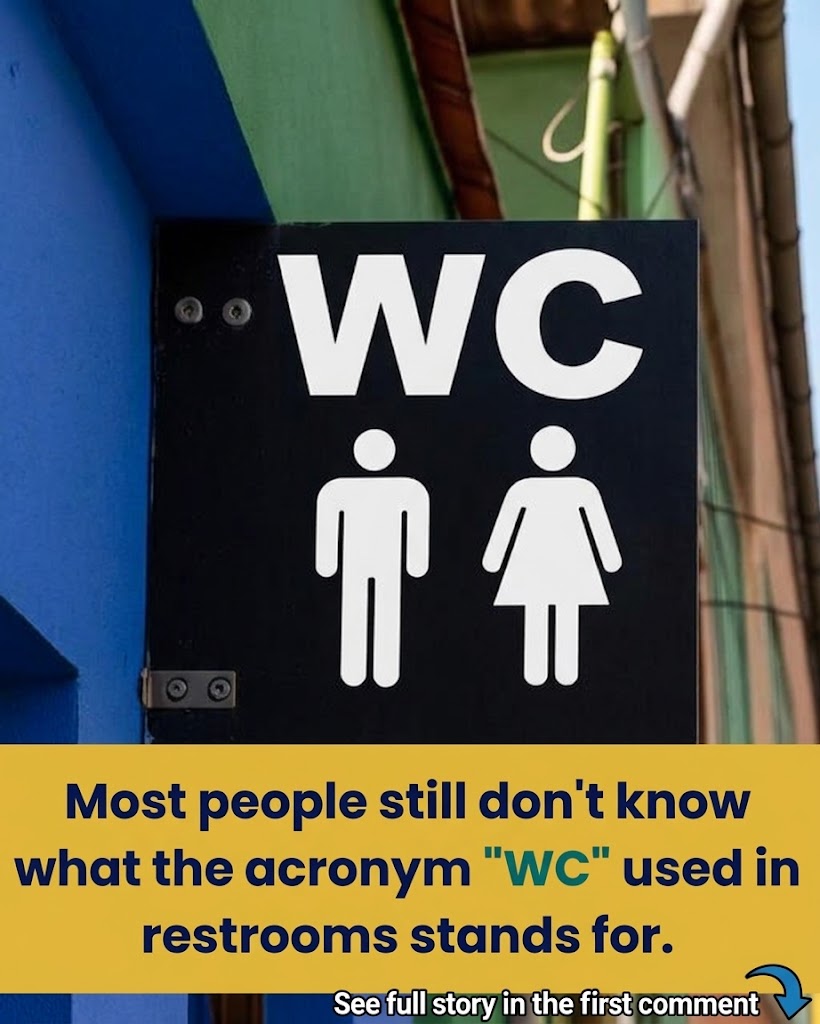
Washrooms around the world have many different names, depending on language, culture, and local customs. In the UK and across Europe, one abbreviation appears frequently on public signs: “WC.” You may have seen it in train stations, restaurants, airports, and hotels without ever stopping to wonder what those two letters actually mean.
The answer is surprisingly simple: WC stands for “Water Closet.” While the phrase sounds strange today, it has its roots in the early history of indoor plumbing. The term originally described a small, private room containing a toilet connected to a water supply.
Before indoor plumbing became common, homes often had a room called the bathroom, but it did not necessarily contain a permanent toilet. Bathing involved carrying water from an outside source, heating it, and filling a tub by hand. Toilets were generally located elsewhere, often outside the main living area.
As plumbing systems improved during the 19th century, flush toilets began being installed inside homes. Since existing bathrooms were primarily associated with bathing, toilets were sometimes placed in separate, compact rooms. These small spaces became known as “water closets,” giving rise to the abbreviation WC.
The term eventually became widely recognized, particularly throughout Europe. Although modern bathrooms have changed dramatically, “WC” remains on signs in many countries. It is a fascinating example of how an old expression can survive long after the original design or purpose behind it has changed.
The abbreviation has also surprised plenty of people online. Some social media users have admitted that they had seen WC signs for years without knowing what they meant. Others said they only discovered the meaning as adults, while some were surprised that anyone could be unfamiliar with the term.
Of course, not everyone was shocked by the revelation. Many people said they had known that WC meant “Water Closet” since childhood. For them, the abbreviation was simply an ordinary part of everyday life and international travel.
So, the next time you see “WC” on a door, you’ll know exactly what it means. Those two letters are more than just a sign pointing toward a toilet—they are a small reminder of how language, architecture, and plumbing have evolved over time.