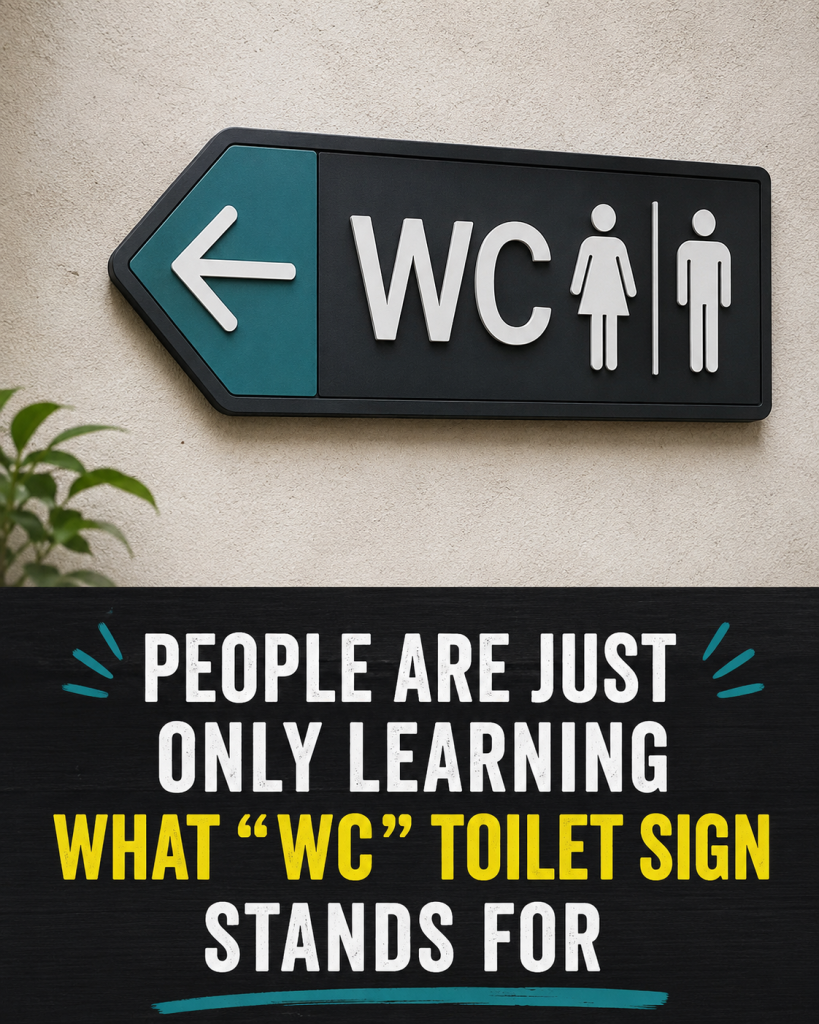
If you’ve ever seen the letters “WC” outside a public restroom and paused for a moment, you’re definitely not alone. Around the world, people encounter different signs for the same essential facility—bathroom, restroom, toilet, washroom, lavatory, or WC—and sometimes the variety can feel confusing. The abbreviation “WC” is especially common in Europe and international spaces such as airports, train stations, hotels, and restaurants. While it may seem mysterious at first, its meaning is actually quite straightforward and rooted in the history of indoor plumbing and sanitation.
Understanding where the term comes from also helps explain why different countries use different words for the same place. The abbreviation “WC” stands for “Water Closet,” a term that dates back to the early development of indoor plumbing systems. In its original usage, a water closet referred specifically to a small enclosed room containing a flush toilet. The “water” part of the name comes from the flushing mechanism, which uses water to remove waste, while “closet” referred to a small private room or enclosed space.
Over time, as plumbing technology improved and homes began to include more modern bathrooms, the term “water closet” remained in use, especially in technical, architectural, and international contexts. Historically, indoor toilets were not always part of the home. Before the late 19th century, many households relied on outdoor toilets or shared facilities, particularly in rural and less developed urban areas.
Bathing and toileting were often separated into different spaces, and in many homes, there was a designated room for bathing but not necessarily for waste disposal. With the expansion of modern sewage systems and plumbing infrastructure during the 19th and early 20th centuries, indoor toilets became more common, eventually leading to the combination of bathing and toilet facilities into a single room.
As sanitation systems developed, the need for a discreet and hygienic way to refer to toilet facilities also influenced language. Different cultures adopted different euphemisms based on social norms and linguistic preferences. For example, in the United States, terms like “bathroom” and “restroom” became widely used, even in places where no bathing or resting actually occurs. In the United Kingdom and many other English-speaking regions, words like “toilet” or “loo” are more common in everyday speech. Meanwhile, “washroom” is frequently used in Canada, reflecting yet another regional variation.
The term “WC” became especially popular in Europe because it provided a neutral, widely understood label that could be recognized across multiple languages. Unlike “bathroom” or “restroom,” which are more culturally specific, “WC” is short, practical, and easy to display on international signage. This is one reason why travelers often see “WC” in airports, train stations, and tourist areas, where clarity and universal understanding are important. It serves as a functional symbol rather than a culturally nuanced word.
Interestingly, the evolution of bathroom terminology reflects not only technological changes but also social attitudes toward privacy and hygiene. In earlier centuries, the act of using the toilet was often considered highly private or even taboo in public discussion. As a result, indirect or euphemistic terms became more common. Words like “restroom” were designed to sound more polite, while “bathroom” originally referred to a room for bathing rather than toileting. Over time, these terms expanded in meaning and became interchangeable in many modern contexts.
In architectural terminology, “water closet” is still used in some countries to describe a separate small room containing only a toilet, often located inside or adjacent to a larger bathroom. This design is especially common in parts of Europe, where separating the toilet from the bathing area is considered more hygienic or practical in shared households. In such layouts, the WC may include just a toilet and sometimes a small sink, while the bathtub or shower is located in a different room.
Language differences also contribute to confusion among travelers. For example, someone from the United States might say “bathroom,” while a visitor from the United Kingdom might say “toilet,” and a Canadian might say “washroom.” Despite these differences, all terms refer to the same general concept: a room containing toilet facilities. The diversity of terms highlights how language evolves based on culture, history, and social habits rather than strict technical definitions.
Online discussions often show how curious people are about these differences. Social media platforms and forums frequently feature conversations where users compare regional terms and share humorous misunderstandings. These discussions highlight how everyday language can vary significantly even among English speakers. What seems normal in one country may sound unusual or even confusing in another, even though the meaning is ultimately the same.
Today, “WC” remains one of the most internationally recognized symbols for public toilet facilities. Its simplicity and neutrality make it ideal for global use, especially in multilingual environments. While newer digital signage sometimes uses icons such as a toilet symbol instead of letters, “WC” is still widely displayed and understood across many parts of the world. It continues to serve its original purpose effectively: helping people quickly identify essential facilities regardless of language barriers.
In conclusion, the term “WC” may look unfamiliar or even puzzling at first, but its meaning is rooted in practical history and global communication. From its origins as “water closet” in early plumbing systems to its modern use in international signage, it represents how language adapts alongside technology and culture. Whether you call it a bathroom, restroom, washroom, toilet, or WC, the purpose remains the same. It is a small but essential space that reflects both human necessity and the fascinating diversity of language around the world.