You have held them thousands of times without giving them a second thought. Coins passed from palm to palm at grocery stores, slipped into parking meters, dropped into tip jars.
Or flipped in the air during moments of indecision. They are so familiar that they fade into the background of daily life.
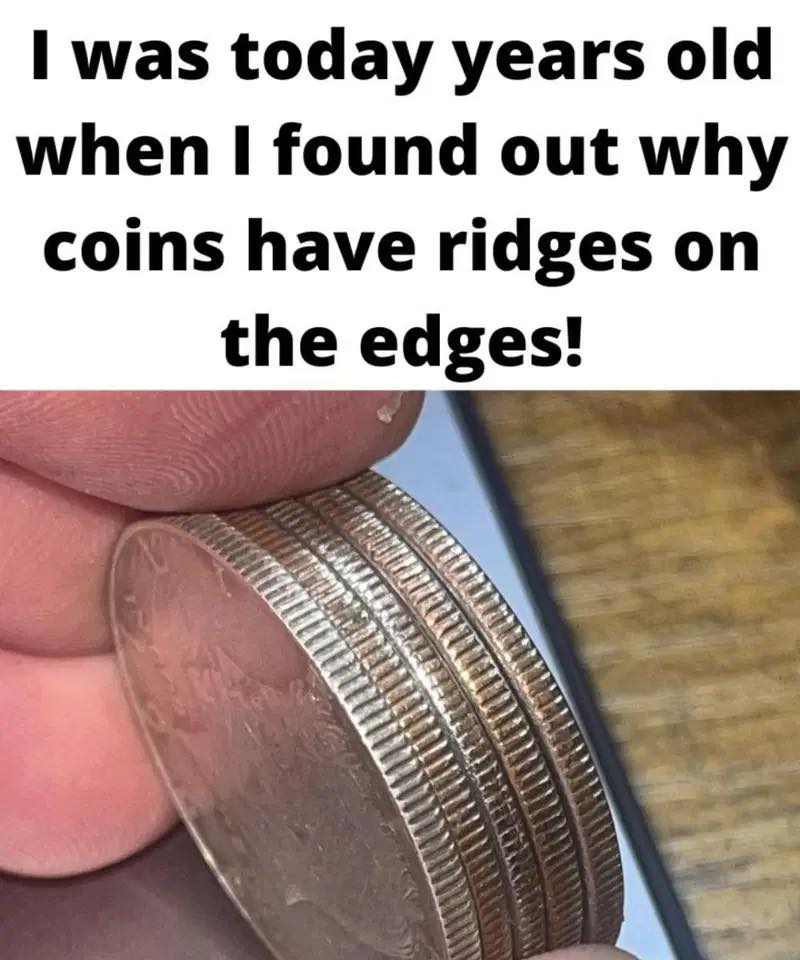
Yet if you pause for a moment and run your thumb along the edge of a coin, you will feel something intentional—tiny, evenly spaced grooves cut with precision. These ridges are not decorative. They are not aesthetic flourishes, nor are they manufacturing accidents.
They are the legacy of a time when money itself was vulnerable, when trust in currency could be quietly eroded, one small shaving at a time.
Those grooves are evidence of an old problem, a clever solution, and a lasting lesson about how societies protect value.
When Money Was Metal—and Metal Was Temptation
For much of human history, money was not symbolic. Coins were valuable because of what they were made of. Gold, silver, and copper carried intrinsic worth. A silver coin was valuable because it contained silver. A gold coin was valuable because it held gold.
This system worked well—until it didn’t.
The very materials that gave coins their value also made them vulnerable to exploitation. Precious metals are malleable. They can be shaved, scraped, or trimmed without immediately destroying the object. This opened the door to a widespread and dangerous crime known as coin clipping.
Coin clipping involved shaving tiny amounts of metal from the edges of coins. The removed slivers were collected, melted down, and reused.
The clipped coins, though slightly lighter, still looked legitimate enough to circulate at full value. One coin might lose only a fraction of a gram—an amount nearly impossible to detect without careful measurement.
But across hundreds or thousands of coins, the losses added up.
A Silent Threat to Economic Stability
Coin clipping was particularly dangerous because it operated quietly. Unlike counterfeiting, which produced obvious fakes, clipped coins blended seamlessly into everyday transactions.
Merchants unknowingly accepted underweight coins. Governments lost precious metal. Honest citizens paid the price through weakened currency.
As more clipped coins entered circulation, trust began to erode. Merchants became suspicious. Some refused coins altogether.
Others weighed or inspected them, slowing commerce. In extreme cases, entire regions experienced monetary instability as people lost confidence in the value of their money.
This was not merely theft—it was a form of economic sabotage.
By the late 17th century, England faced a severe currency crisis. Coin clipping had become so widespread that much of the nation’s silver coinage was significantly underweight. The economy suffered, trade slowed, and public trust in money weakened.