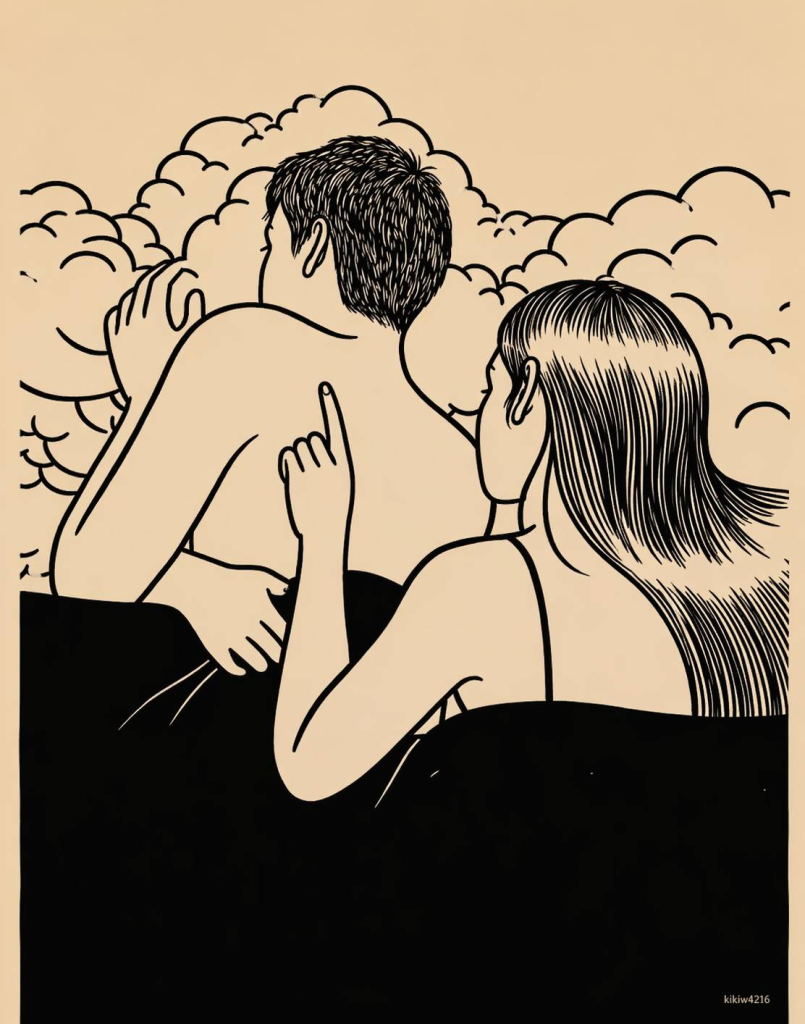
When your partner turns their back toward you at night, it can stir unexpected thoughts. In the quiet darkness, small shifts feel magnified. Without conversation or facial expressions to interpret, body positioning becomes the only visible cue. It’s natural to wonder whether that turned back reflects emotional distance, frustration, or a subtle withdrawal. However, sleep positions are influenced by many factors beyond relationship dynamics. Temperature preferences, physical comfort, spinal alignment, and long-standing habits often shape how someone settles into rest. Before assuming emotional meaning, it’s important to recognize that nighttime posture is primarily about the body seeking restoration. The brain prioritizes comfort and regulation during sleep, not symbolic messaging. A partner turning away may simply be responding to their nervous system’s need for a specific position that allows deeper rest.
One of the most common explanations is purely practical: space. Some people sleep better without direct airflow from another person’s breath, while others prefer cooler air on their face or chest. Facing outward can improve ventilation and reduce overheating, particularly in warmer climates or during summer months. Many individuals also favor side-sleeping positions for spinal support, and once they find that posture, they may remain there out of habit. Sleep scientists consistently emphasize that quality rest depends on minimizing disruptions. If turning away helps someone fall asleep faster or stay asleep longer, the body will gravitate toward that orientation automatically. In this sense, the behavior reflects physiology rather than psychology. A well-rested partner is more emotionally present during the day, making physical comfort at night a healthy priority rather than a red flag.
That said, changes in sleep behavior can sometimes mirror daytime tension. If a couple previously fell asleep facing each other and suddenly one partner consistently turns away following conflict, it may represent a temporary need for emotional processing. Humans often express subtle distancing behaviors when feeling hurt, overwhelmed, or preoccupied. Sleep is a vulnerable state, and positioning can unconsciously reflect internal states. However, it’s essential not to overinterpret a single pattern. Emotional withdrawal usually appears alongside other signs: reduced communication, less affection during waking hours, irritability, or avoidance of shared activities. A turned back alone is rarely definitive evidence of relationship trouble. Context matters. Patterns matter. Open dialogue matters even more.
Interestingly, many relationship researchers note that back-to-back sleeping can actually signal security and independence. Couples who feel safe with one another often do not require constant physical contact to feel connected. Light contact—such as touching backs or feet while facing opposite directions—demonstrates a balance between intimacy and autonomy. This position suggests trust: each person is comfortable enough to relax fully without needing to monitor the other’s face or reactions. In long-term partnerships especially, comfort replaces performative closeness. Physical proximity remains, but rigid positioning fades. The body relaxes into whatever posture promotes rest. Paradoxically, this ease can reflect emotional stability rather than distance.
There are also personality and attachment differences to consider. Some individuals prefer physical closeness throughout the night, while others value subtle independence even within intimacy. Neither preference is inherently healthier. What matters is mutual understanding. If one partner feels rejected by the turned-back posture, expressing that feeling gently can prevent silent resentment. A simple conversation—curious rather than accusatory—can clarify intentions. Often, the explanation is straightforward: “I sleep better this way,” or “My shoulder hurts if I face the other direction.” These practical answers dissolve assumptions quickly. Communication transforms uncertainty into reassurance.
Ultimately, sleep is a biological process first and a relational symbol second. The body’s priority during rest is recovery—lowering heart rate, regulating hormones, repairing tissues, and consolidating memory. Positioning serves those physiological needs. While body language can reflect emotional states, it must be interpreted within a broader pattern of behavior. If warmth, affection, and responsiveness remain present during the day, a turned back at night likely means nothing more than comfort. Relationships thrive not on constant face-to-face proximity, but on trust, communication, and respect for individual needs. Sometimes the healthiest sign of connection is the freedom to turn away, fall asleep peacefully, and know that closeness remains—even without eye contact in the dark.