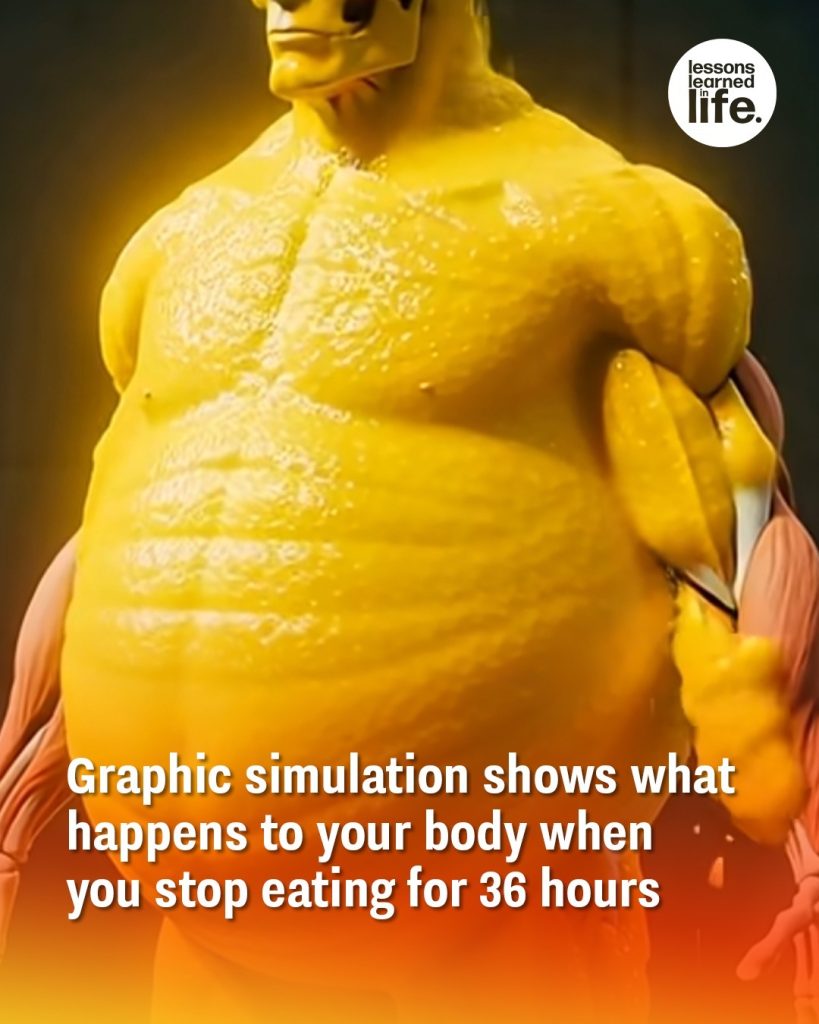
Graphic simulation shows what happens to your body when you stop eating for 36 hours

Fasting for 36 hours has become a popular online trend, often described as a way to “reset” the body. Supporters claim it helps metabolism, mental clarity, and overall health, but the reality is more nuanced than many viral posts suggest.

The basic idea behind fasting is that when food intake stops, the body first burns available glucose. It then uses stored glycogen before gradually shifting toward burning more fat for energy.

During longer fasts, the body may enter ketosis, a state where fat becomes the primary fuel source. Some proponents also highlight autophagy, a natural cellular cleanup process that may increase when nutrient intake is reduced.

Some people report feeling lighter, more focused, or less bloated during extended fasts. Others, however, experience fatigue, irritability, or difficulty concentrating. Individual responses vary widely based on health, lifestyle, and prior eating habits.

Extended fasting is not without risks. Dizziness, headaches, dehydration, low energy, and electrolyte imbalances can occur, especially if fluids and nutrients are not managed properly.

Fasting can be particularly risky for people who are pregnant, have diabetes, low blood pressure, a history of disordered eating, or who take medications affecting blood sugar or blood pressure.

For those interested in fasting, experts generally recommend starting gently, prioritizing hydration, getting adequate sleep, and avoiding intense physical activity during the fast. Consulting a healthcare professional is especially important before attempting longer fasts.

Ultimately, the most reliable “reset” does not come from extreme measures. Consistent balanced meals, regular movement, good sleep, and sustainable habits remain the foundation of long-term health.
Related Posts

Home with 68.9 Acres in Centerville, Tennessee

This 3-bedroom, 2-bath home sits on 68.9 acres just outside Centerville, Tennessee. The layout offers 1,456 square feet of living space, along with a second residence on…

Expansive 101.18-Acre Virginia Property with Endless Potential

This expansive tract stretches across 101.18 acres near Clintwood, Virginia, within the Appalachian landscape. The land follows the Cranesnest River for more than three thousand feet. Moreover,…

Historic Riverfront Estate on 86.5 Acres

Historic Riverfront Estate on 86.5 Acres – Restored 1812 Farmhouse, Private Potomac Frontage & Investment Potential Step into a world where history, luxury, and nature converge. This…

The Deadly Warning Signs Your Skin Is Sending You That You Should Never Ignore

Your skin often signals problems before the rest of the body fully recognizes them. Most rashes or itching are harmless, caused by heat, stress, allergies, or irritation,…

Women with few or no friends often share certain traits: strong independence, selective trust, past betrayal experiences, preference for solitude, and high emotional self-reliance. These characteristics don’t signal flaws—they often reflect boundaries, self-awareness, and a deep need for meaningful, authentic connections.

Some women move through life with only a few close relationships, and sometimes none at all. This reality is not a reflection of being unkind, flawed, or…

What Led to This Elderly Man’s Motel Arrest H

Police responded to a local motel after receiving reports of suspicious activity, prompting officers to secure the property while investigators began gathering evidence. An elderly man was…

Leave a Reply

Your email address will not be published. Required fields are marked *