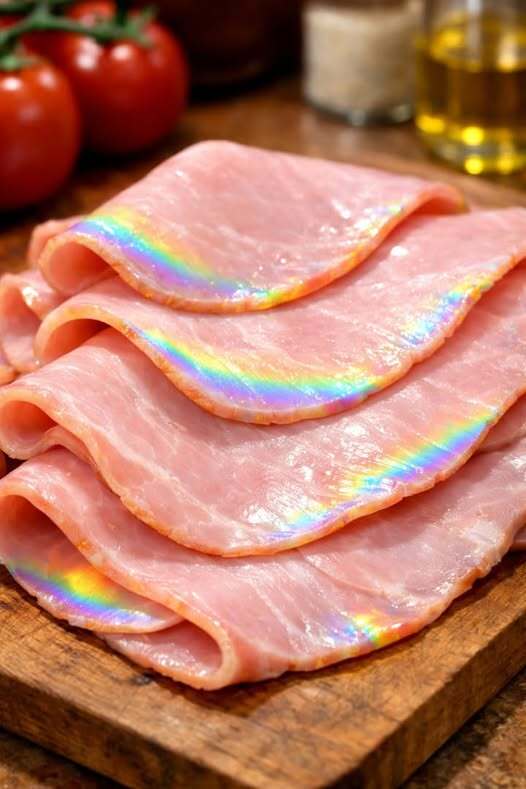
Many people notice it the moment they open a pack of deli ham: a glossy, rainbow-like shimmer spreading across the slices. The shifting greens, purples, and blues can look metallic and unsettling, triggering worries about chemicals, bacteria, or spoilage. While some shrug it off as normal, others hesitate, unsure whether the meat is safe to eat. The truth sits between alarm and indifference, and understanding it requires looking beyond color alone.
That rainbow sheen is usually harmless and has nothing to do with decay. It comes from the way light interacts with tightly aligned muscle fibers in thinly sliced meat. When light hits these layers at certain angles, it splits into wavelengths, producing an iridescent effect similar to oil on water or a soap bubble. Moisture on the surface and curing salts like sodium nitrite can intensify the shine, making it more noticeable in deli meats.
The real danger lies in mistaking this visual effect for a sign of freshness. Spoilage reveals itself through other changes that matter far more. Healthy ham should be pink and firm, not gray, green, or blotchy. Texture is key: safe meat feels smooth, while spoiled meat becomes sticky or slimy due to bacterial growth. Smell is even more important, as sour, sulfur-like, or ammonia odors clearly signal that the meat has gone bad.
Time is another critical factor. Once opened, deli ham becomes vulnerable to bacteria even under refrigeration. Some microbes, such as Listeria, thrive in cold environments and can multiply without obvious visual clues. Opened deli meat should generally be eaten within three to five days.
Proper storage helps slow spoilage but cannot stop it. Keeping ham tightly sealed in the coldest part of the refrigerator reduces risk, but it does not eliminate it. The rainbow sheen does not extend shelf life or indicate safety.
What matters most is using all your senses together. Clean, shifting colors alone are not a warning. Slime, off-odors, discoloration, or age are. When doubt arises, discarding the meat is always the safer choice.