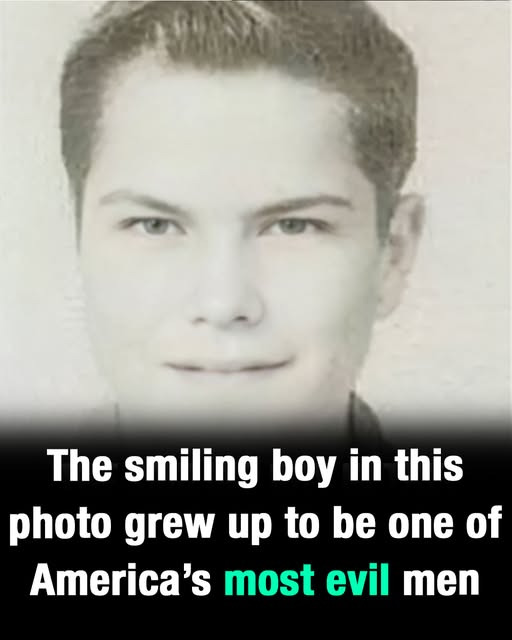
In high school, his classmates’ described him as utterly lacking humor and said that he always ”hung back in the background.” He spent most of his free time outside school bagging groceries and stocking shelves at a nearby supermarket, saving every dollar he could to buy himself a car.
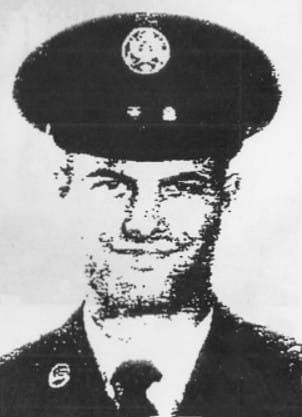
After graduating, he enlisted in the U.S. Air Force in June 1966.
He completed basic and technical training in Texas before being assigned to Brookley Air Force Base in Mobile, Alabama, where he served as an antenna installer and maintenance specialist.
He served several years honorably, never getting into trouble.
When he came home, he got married, had children, and built a life that looked completely ordinary.
He worked at a home security company, installing alarm systems for families who feared break-ins. He also worked at an IGA supermarket, where his coworkers nicknamed him “Blue Book Man” because he was obsessed with following the rules and often scolded others for even chatting during work hours.
Outside of work, he was a regular churchgoer and even served as president of the church council. To his neighbors, he was the picture of responsibility. To his coworkers, he was quiet and punctual.
No one suspected a thing.
The murders begin
In the early 1970s, everything changed.
One winter morning, a local family, the Otero’s was found dead inside their modest suburban home, the parents and two young children. They had been strangled. There were no signs of forced entry. The killer had taken his time.
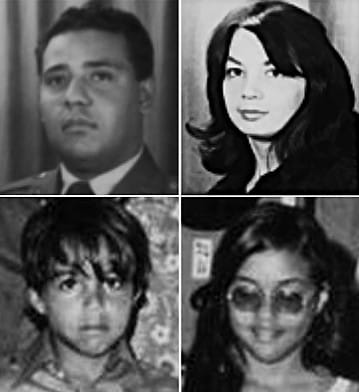
Police were baffled. There was no clear motive, no fingerprints, no leads.
A few months later, a letter arrived at a local newspaper. Inside was a typed confession, full of gruesome detail only the killer could know.
At the bottom, he signed it with three chilling letters:
“BTK.” Bind them. Torture them. Kill them.
A city living in fear
Over the next 17 years, he struck again and again.
He broke into homes in the middle of the night. He stalked women, studied their routines, and waited until they were alone.
Each crime scene was a nightmare; carefully staged, methodical, and cold.
Sometimes, he took small trophies from his victims. Other times, he left messages, taunting police and reporters.
For decades, he vanished and reappeared at will.
The communities in Wichita and Park City, Kansas, where most of the murders occurred, lived in constant fear.
People changed their locks, installed alarms, and double-checked their windows. Parents warned their daughters not to stay out late. No one knew who the killer was, or what he looked like. He could have been anyone.
The disappearance
Then, in 1991, he stopped.
No more letters. No more victims.
The trail went cold. Detectives retired. Residents tried to move on. BTK became a ghost story, the name whispered by people who still remembered those dark years.
Some believed the killer had simply died. But in reality, it was the birth of his daughter that kept him too busy to kill.
The ego that gave him away
More than a decade later, in 2004, BTK suddenly reemerged.
He started sending packages to local TV stations and newspapers, notes, drawings, even dolls posed to resemble his victims.
He bragged about his crimes and mocked investigators who had never caught him.
Then, in one fateful message, he made a mistake.
He asked police if they could trace a floppy disk he wanted to send, and if they promised they couldn’t. Detectives responded publicly that it was safe.
BTK sent the disk.
When investigators examined it, the data pointed to a local church computer — and a man who served as the president of the church council.
The shocking arrest
Police surrounded the suspect’s vehicle in February 2005, during one of his lunch breaks. When officers approached, he didn’t resist. He looked calm. Almost relieved.
During the very first interrogations, he realized it was over. The police had overwhelming evidence linking him to BTK. He confessed almost immediately.
His name was Dennis Rader: a husband, father, church leader, and city employee.
For over 30 years, he had lived among the very people he terrorized.
The truth comes out
During his confession, Rader described each of his ten murders in chilling, step-by-step detail.
He explained how he stalked his victims, broke into their homes, and bound them with ropes or tape. He talked about his fantasies, what he called his “Factor X”, and how he believed it drove him to kill. He described it as a supernatural element that also motivated Jack the Ripper, the Son of Sam and the Hillside Strangler.
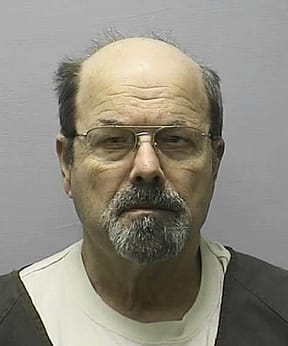
In court, he showed no emotion, calmly and matter-of-factly describing the murders — which he chillingly referred to as his “projects.”
At Rader’s sentencing, victims’ families made statements, after which Rader apologized in a rambling 30-minute monologue.
Justice and legacy
He was sentenced to ten consecutive life sentences, one for each victim. He remains behind bars in Kansas, where he will spend the rest of his life.
He still writes letters from prison, sometimes to criminology students studying his case, a haunting reminder that he continues to crave attention, even decades later.
Much of the aftermath has focused on Dennis Rader’s seemingly perfect family life — and the unimaginable shock his wife and children faced when they learned the truth: that their husband and father was one of the most notorious serial killers in American history.
At first, the family refused to believe it. When Rader was arrested, they were, understandably, in complete shock. In the months that followed, they tried to disappear from public view as the horrifying details of his crimes came to light.
Rader’s daughter in new documentary
A new Netflix documentary explores how Rader’s daughter Kerri Rawson — has processed the unimaginable.At the time of her dad’s arrest in 2005, Kerri was newly married and expecting her first child, living what she thought was an ordinary suburban life.
The revelation that her father was responsible for a string of brutal murders shattered that illusion, forcing her to confront the trauma of his crimes and reexamine her own childhood memories. That process of reflection led her to question what was real and what wasn’t, making healing even more difficult.
”You were a good Dad most of the time and raised us well, and we do not know what to believe – who you were to us, or who you were to others,” Rawson wrote her father in a letter dated Aug. 8, 2007.
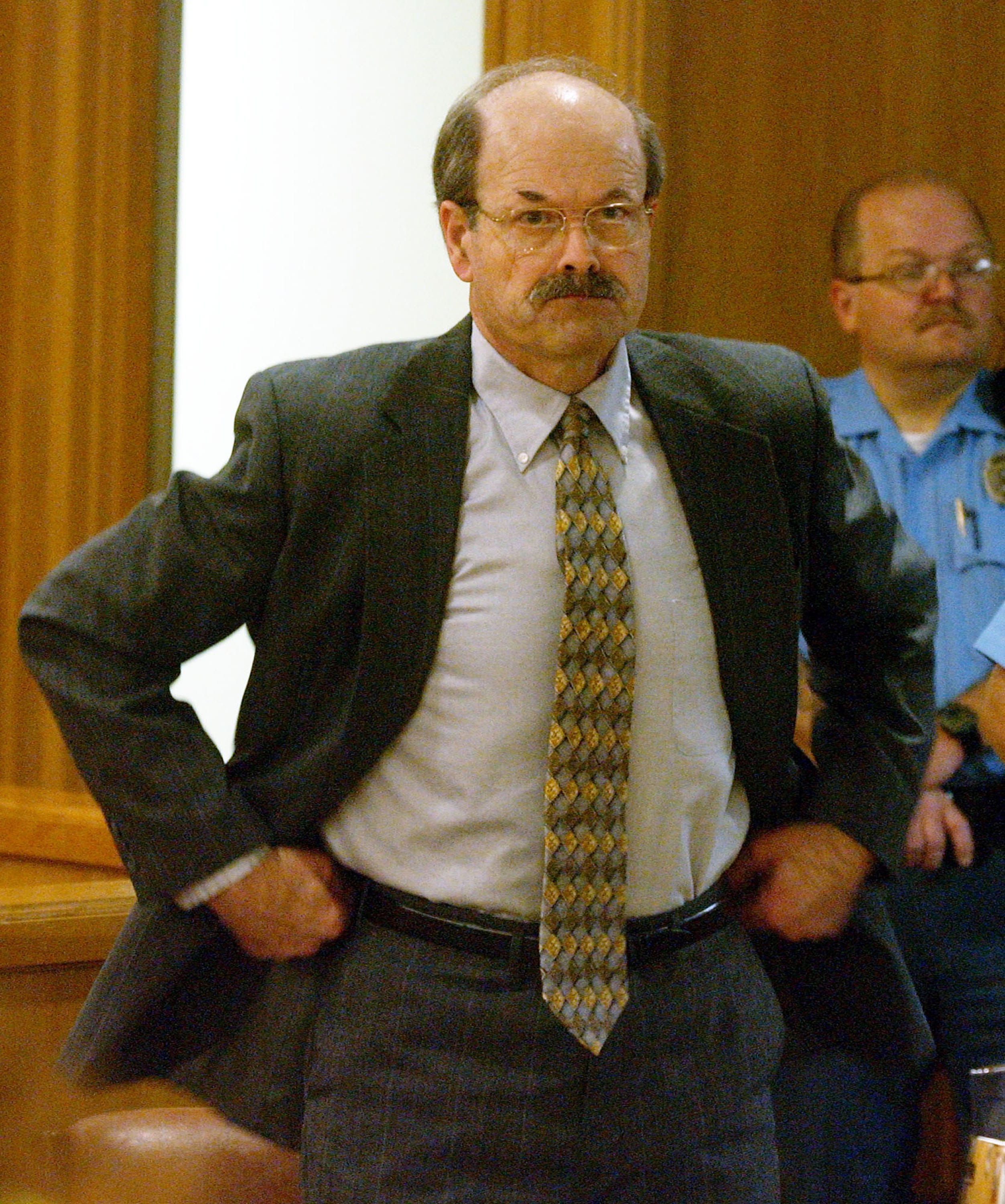
Since then, Kerri has embarked on a long journey of recovery and understanding, grappling with the dark legacy her father left behind. As seen in the documentary, part of that journey includes helping investigators try to connect unsolved cases to Rader, a painful effort that comes at great personal cost, as it reopens old wounds and challenges her sense of identity.
In the documentary, Kerri recalls a visit to her father in prison, where they had a tense confrontation about his potential involvement in other crimes.
The exchange grew heated, and by the end of the film, Kerri reflects on how her relationship with her father remains complicated and ever-changing.
Looking back at that photograph of a polite, smiling young, it’s almost impossible to reconcile that innocent face with the monster he became.
He wasn’t a stranger in the dark — he was the neighbor next door.