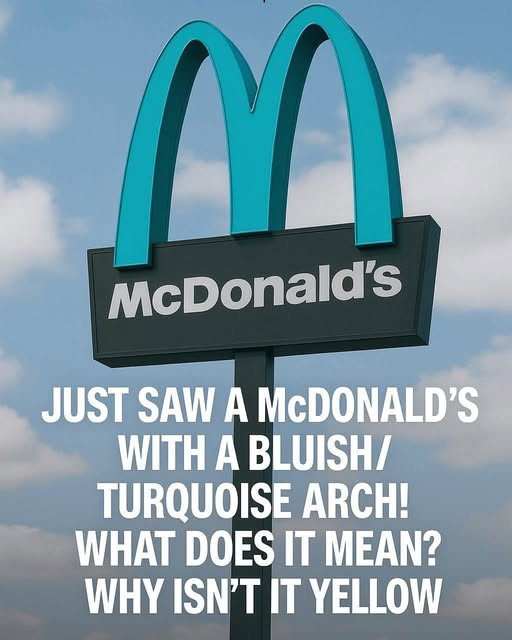
If you find yourself driving through the desert landscapes of Sedona, Arizona, you’ll quickly notice that the city is unlike most others in the United States. Famous for its striking red rock formations and spiritual atmosphere, Sedona has worked hard to preserve its natural beauty and unique character. And tucked within this scenic community is something you won’t find anywhere else in the world: a McDonald’s with turquoise arches.
For most of us, the golden arches are one of the most recognizable symbols on Earth. From New York to Tokyo, the bright yellow “M” shines as a beacon of fast food and brand familiarity. But in Sedona, that iconic gold has been replaced with a cool shade of turquoise, making this McDonald’s not only a place to grab a meal but also a local landmark and tourist attraction in its own right.
The Reason Behind the Color Change
The decision wasn’t made for marketing gimmicks or to draw attention—it was born out of necessity. Sedona has long upheld strict building codes aimed at protecting the harmony of its natural surroundings. When McDonald’s announced plans to open a location there in 1993, city officials raised concerns that the standard golden arches would clash too harshly against the red rock backdrop.
Bright yellow, while cheerful and highly visible in urban environments, was considered disruptive in Sedona’s earthy desert palette. Local leaders wanted to ensure that no commercial structure would detract from the stunning views that defined the city’s identity.
After discussions between the corporation and the city, a compromise was reached. The arches would remain, but they would not be golden. Instead, they would be turquoise—a color that blended more gently with Sedona’s natural surroundings while still standing out enough to remain recognizable.
From Compromise to Icon
At first, the change was purely practical, a way to satisfy city codes while allowing McDonald’s to open its doors. But over time, the turquoise arches took on a life of their own. Tourists who came to Sedona to marvel at the famous red rocks and scenic hiking trails also began stopping at the McDonald’s—not necessarily for the food, but for the unique photo opportunity.
The location quickly became a quirky attraction. Travel bloggers, photographers, and curious visitors added the turquoise arches to their must-see lists, giving the restaurant a status that far exceeded expectations. What started as a compliance measure evolved into a beloved symbol of Sedona’s commitment to its identity.
A Lesson in Adaptation
The Sedona McDonald’s stands as an unusual but meaningful example of how global corporations can adapt to local values without losing brand recognition. McDonald’s didn’t abandon its arches or attempt to rebrand. Instead, by making one thoughtful adjustment, it managed to preserve both its corporate image and the community’s cultural and environmental priorities.
This rare blend of compromise and creativity has made the turquoise arches more memorable than their golden counterparts. In many ways, the Sedona McDonald’s demonstrates that respecting local identity can enhance a brand rather than diminish it.
More Than Fast Food
Today, the turquoise arches serve as more than just a sign for hamburgers and fries. They have become part of Sedona’s story—proof that even the most ubiquitous global brands can find ways to harmonize with the communities they serve. Visitors leave not only with photos of red rock canyons and desert sunsets but also snapshots of a McDonald’s unlike any other.
In the end, the turquoise arches embody Sedona’s spirit: distinctive, thoughtful, and unafraid to stand apart. They remind us that sometimes the smallest compromises lead to the most extraordinary results.