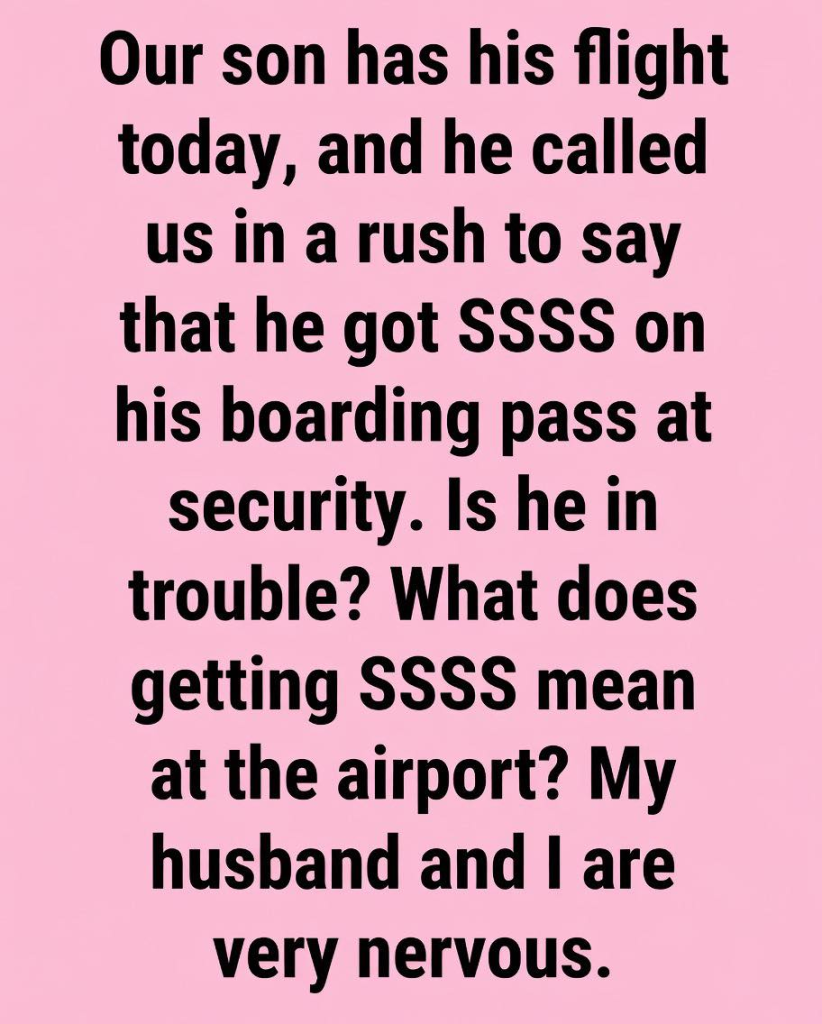
Seeing “SSSS” printed on your boarding pass can trigger an immediate surge of anxiety, even for experienced travelers who have flown dozens or hundreds of times. The four letters stand for Secondary Security Screening Selection, and while they may feel ominous at first glance, they are far less dramatic than they appear. The designation simply indicates that you have been selected—either randomly or through automated systems—for additional screening before boarding your flight. This process is part of a broader aviation security framework designed to maintain safety across global air travel. It is not a personal judgment, nor is it a reflection of wrongdoing. In fact, many travelers who encounter SSSS are selected without any specific reason tied to their behavior or history. The emotional reaction often comes from the lack of explanation, but once you understand that it is a routine and relatively common occurrence, the situation becomes far easier to manage. Instead of interpreting it as a red flag, it is more useful to think of it as a temporary procedural step that millions of passengers experience each year without consequence.
The process behind SSSS selection is rooted in layered security systems that rely on algorithms, travel data, and occasionally randomness to ensure unpredictability. Aviation security depends heavily on not being entirely predictable, which is why even low-risk travelers may be selected from time to time. Factors that can contribute include last-minute bookings, one-way tickets, international itineraries, travel to or from certain regions, or even something as simple as having a common name that resembles another individual in a database. However, none of these factors alone mean that a traveler is suspicious. In many cases, there is no clear or identifiable reason at all. The system is intentionally broad to avoid patterns that could be exploited. This can feel frustrating because it removes the sense of control travelers prefer to have, but it is also what makes the system effective. Understanding this randomness is key to staying calm, because it reinforces the reality that the selection is procedural rather than personal.
When you go through SSSS screening, the experience is typically straightforward, though slightly more detailed than standard security checks. You may be directed to a separate area where security personnel will conduct additional inspections. This can include swabbing your hands and belongings for trace substances, manually inspecting your carry-on luggage, and performing a more thorough pat-down if necessary. You might also be asked a few simple questions about your travel plans or whether you packed your bags yourself. These questions are routine and not meant to intimidate or interrogate. The entire process usually takes anywhere from five to fifteen minutes, though it can vary depending on airport traffic and staffing. Importantly, once you complete this step, you are free to proceed like any other passenger. There are no ongoing restrictions tied to the designation for that specific flight. Knowing what to expect helps remove uncertainty, which is often the biggest source of stress in these situations.
Preparation can make a significant difference in how smoothly your experience goes. Arriving at the airport earlier than usual is one of the simplest and most effective ways to reduce pressure. Giving yourself an extra buffer of time ensures that even if the screening takes longer than expected, you will not feel rushed or worried about missing your flight. Wearing simple clothing, minimizing metal accessories, and keeping your belongings organized can also help speed up the process. Having your liquids, electronics, and travel documents easily accessible shows cooperation and efficiency, which can subtly influence how quickly things move along. Just as important is your demeanor. Remaining calm, polite, and cooperative not only makes the interaction more pleasant but can also help it conclude more quickly. Security personnel are trained to observe behavior, and a composed attitude contributes to a smoother overall experience for everyone involved.
Emotionally, the key challenge of seeing SSSS lies in managing the immediate sense of being singled out. It is natural to wonder why it happened or whether it will affect your travel plans. However, reframing the situation is essential. Instead of viewing it as an inconvenience or a problem, it can be seen as a routine checkpoint that simply requires a bit more time. Many frequent travelers, including business professionals and even airline staff, have encountered SSSS at some point. It is not rare, and it is not permanent. In most cases, it will not happen again on your next trip. Keeping this perspective helps prevent unnecessary stress and allows you to stay focused on your journey rather than the screening process. Breathing steadily, staying patient, and avoiding overthinking the situation can make a noticeable difference in how you experience those extra minutes at the airport.
Ultimately, SSSS is just one small component of a much larger system designed to keep air travel safe for everyone. While it may feel inconvenient in the moment, it serves a purpose that extends beyond any individual traveler. The process is designed to be temporary, efficient, and non-disruptive, even if it does not always feel that way at first. Once you pass through the additional screening, your travel experience continues as normal, with no lingering effects or complications. By understanding what SSSS means, why it happens, and how to navigate it calmly, you take away its power to create stress. What initially feels like a setback becomes a manageable and even predictable part of modern travel. And in the broader context of your journey, it is just a brief pause before you continue on your way, often forgotten entirely by the time you reach your destination.