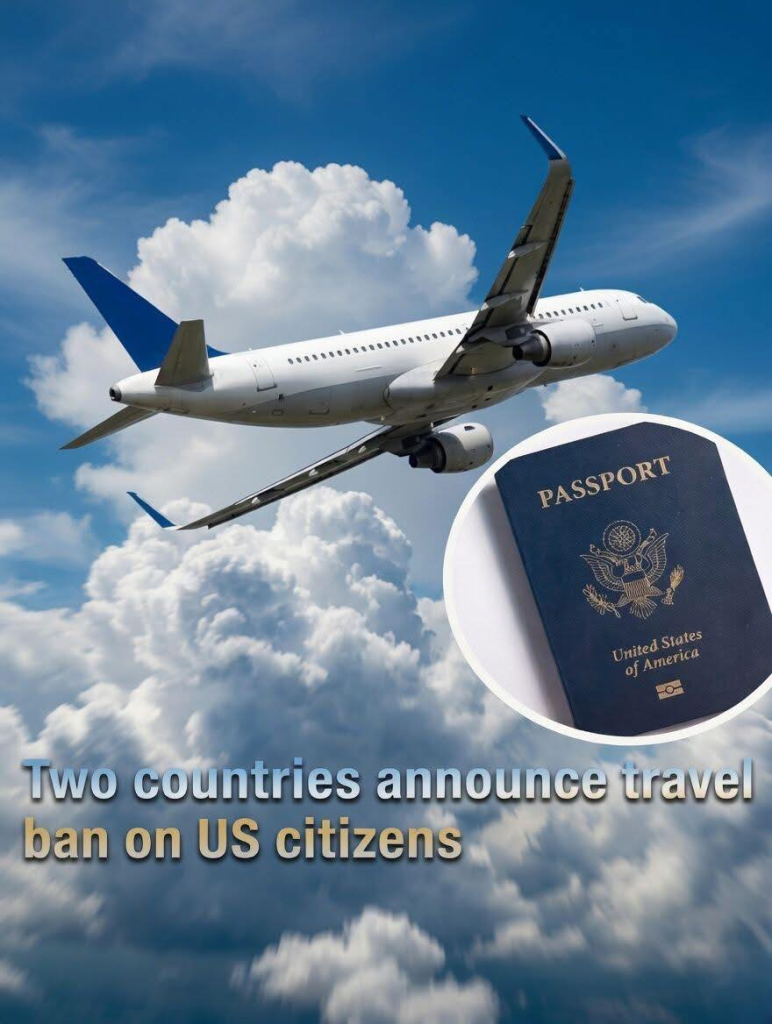
What appears at first glance to be a technical travel issue is, in reality, a powerful geopolitical signal. Recent decisions by several West African governments to restrict or fully ban entry for American citizens are not isolated acts of protest, nor are they temporary diplomatic spats. They reflect a broader and more profound shift in how nations in the Sahel and surrounding regions view sovereignty, reciprocity, and their place in a world that has long been shaped by asymmetrical power relationships. While headlines focus on visas and borders, the deeper story is about dignity, leverage, and the slow rebalancing of international norms.
At the center of this development are decisions by Mali and Burkina Faso, which recently announced restrictions on U.S. citizens entering their territories. These moves followed earlier actions by Niger, which imposed a permanent halt on visas for Americans, and Chad, which previously suspended similar access. Taken together, these decisions mark a coordinated regional posture rather than a series of unrelated policy choices.
The official justification offered by these governments is straightforward: reciprocity. Leaders argue that if their citizens face restrictive, unpredictable, or burdensome entry requirements when traveling to the United States, then equal treatment should apply in reverse. From their perspective, this is not punishment but parity. For decades, mobility has been one of the clearest indicators of global inequality. Passports from wealthy nations open doors effortlessly, while citizens of poorer or politically marginalized countries face intense scrutiny, delays, and denials. By invoking reciprocity, West African governments are challenging that imbalance directly.
From the standpoint of United States, tightened travel policies are often framed as administrative necessities. Officials cite security vetting, immigration compliance, and bureaucratic capacity as reasons for stricter entry rules. In Washington, such measures are presented as neutral tools of governance, stripped of political intent. Yet this framing overlooks how policies are experienced abroad. For countries whose citizens regularly encounter visa denials or invasive screening, these rules feel less like administration and more like exclusion.
The consequences of the bans extend far beyond diplomats and policymakers. Families with members spread across continents have found themselves suddenly separated, unsure when reunions will be possible. Students who planned to participate in academic exchanges or research programs now face canceled visas and stalled careers. Nonprofit organizations and humanitarian workers report delays that directly affect healthcare delivery, education initiatives, and food security projects. In these cases, the people most affected are ordinary citizens with no influence over the policies that triggered the restrictions.
Psychologically and socially, such disruptions deepen a sense of global inequality. When mobility becomes a privilege reserved for certain nationalities, it reinforces the idea that some lives are inherently more mobile, more valuable, or more trusted than others. By pushing back, Sahel states are not only asserting legal equality but also symbolic agency. They are signaling that access to their territory is not automatic and that respect must be mutual.
This shift also reflects changing regional dynamics. Over the past decade, many West African countries have reevaluated long-standing relationships with Western powers, particularly in the realms of security, development aid, and political influence. Military partnerships, foreign bases, and external interventions have come under increasing scrutiny. In this context, visa and entry policies become one more arena in which sovereignty is asserted. Control over borders is among the most visible expressions of state power, and these governments are using it deliberately.
Another layer of complexity lies in public perception. Within these countries, the bans are often framed domestically as acts of strength and self-respect. Leaders emphasize national dignity and independence, appealing to populations that have grown weary of perceived double standards. Internationally, however, the same actions are sometimes portrayed as destabilizing or antagonistic. This divergence in narratives highlights a persistent gap between how policies are justified internally and how they are interpreted externally.
The widening gap between Washington’s administrative language and West Africa’s reciprocity-based framing illustrates a breakdown in dialogue. Rather than addressing grievances through negotiation, both sides have defaulted to unilateral measures. Mutual suspicion grows, and trust erodes. History shows that such patterns, if left unaddressed, can harden into long-term diplomatic rifts that outlast the original disputes.
Importantly, this moment does not suggest that global cooperation is impossible. Instead, it underscores the need for updated frameworks that recognize changing power dynamics. The world is no longer structured around a small group of nations setting rules for everyone else. Emerging and reasserting states are increasingly willing to say no, to impose conditions, and to demand equal treatment. Whether this leads to healthier reciprocity or entrenched fragmentation will depend on how governments respond in the coming years.
For individuals watching from the outside, the lesson is sobering. Travel, education, and cultural exchange—often assumed to be apolitical—are deeply entangled with power. When governments clash, mobility becomes one of the first casualties. What begins as a visa policy can quickly evolve into a symbol of broader global tensions.
Ultimately, the bans imposed by Mali, Burkina Faso, Niger, and Chad are less about Americans specifically and more about a statement to the world. They signal that the era of one-sided mobility is being questioned, that sovereignty is being reasserted in tangible ways, and that global relationships are entering a phase of renegotiation. Whether this moment leads to renewed dialogue or deeper division remains uncertain. What is clear, however, is that these decisions are not temporary footnotes. They are markers of a shifting international order—one where even the most powerful passports are no longer guaranteed universal access.