In the silent, shadowed corners of history, some stories begin with disappearance and abandonment, as though a life were never meant to be recorded. Xueli Abbing’s life began in just such a place, shrouded in uncertainty and vulnerability.
Born in China with albinism, a rare genetic condition that results from a lack of melanin and leads to very pale skin, hair, and vision challenges, Xueli entered the world under difficult circumstances.
Her birth parents, influenced by cultural stigma about physical differences, left her outside an orphanage with no name, no recorded birthday, and no clear indication of her future prospects.
In parts of China, albinism has historically been misunderstood. Some community members regard physical difference as bad luck or a burden, rather than as human variation, which sadly shapes early treatment of children like Xueli.
Little Xueli was given a name by the orphanage staff: “Xue,” meaning “snow,” and “Li,” meaning “beautiful.” The name reflected her delicate features and uniqueness, but it also carried a symbolic hope that she would be more than her condition.
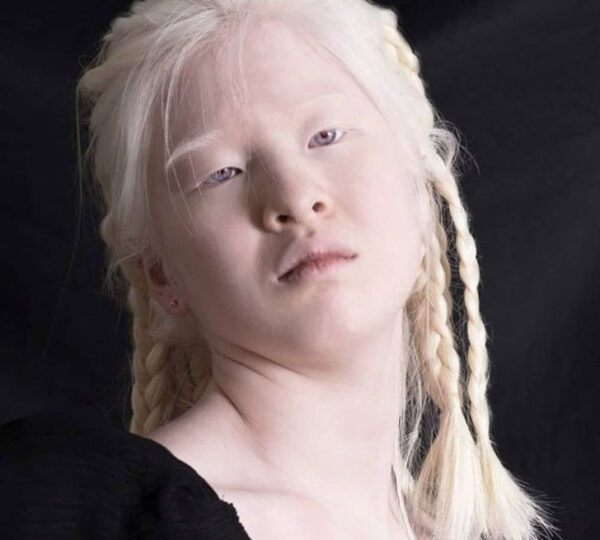
Despite the affectionate name, Xueli had no parents to guide her. She had no birthday, no familiar touch, and no sense of rooted identity. Instead, she began life as an anonymous child amid countless other abandoned babies.
At age three, the trajectory of her life changed dramatically. Xueli was adopted by a Dutch family and taken to the Netherlands, where she entered a radically different cultural environment with more understanding of human diversity.
In her new home, the narrative surrounding her physical difference began to dissolve. Her adoptive family did not view albinism as a defect; they saw her as a unique and cherished individual, worthy of love and encouragement.
Rather than hiding her pale features or trying to make her conform, her family embraced her appearance and heritage, honoring her Chinese name as a meaningful link to her origins and personal history.
At home in the Netherlands, Xueli learned that her skin, hair, and vision issues were not flaws. Instead, they were part of a rare human narrative that she had the power to define on her own terms.
As she grew older, her remarkable look caught the attention of people in creative fields. At age eleven, Xueli’s name became linked to fashion after a fortuitous encounter with a designer.
A Hong Kong designer, inspired by the idea of “perfect imperfections,” invited Xueli to participate in a fashion campaign celebrating diverse human beauty. This opportunity began the transformation of her life.
The campaign aimed to challenge conventional beauty standards and highlight authenticity in human appearance, making space for models of all backgrounds, abilities, and appearances.
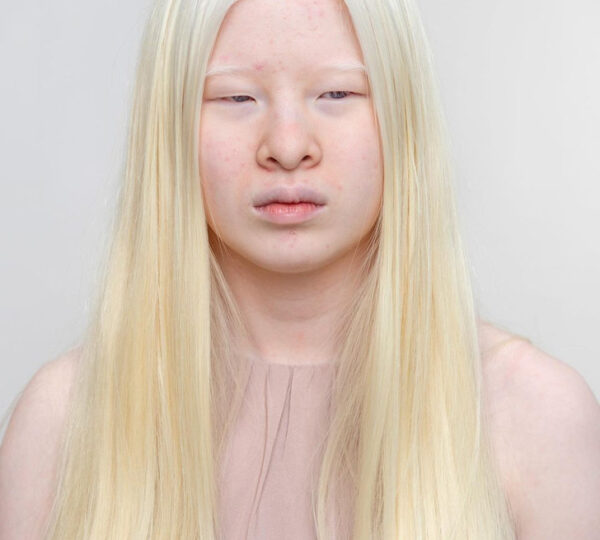
For Xueli, walking onto a runway or standing before a camera lens was more than a career step. It became a powerful statement about representation and inclusion.
Before her emergence, people with albinism were often invisible in mainstream media, or portrayed one‑dimensionally — as curiosities, spectacles, or stereotypes that reduced them to their appearance.
Too often, media representations either ignored people with albinism completely or used them in ways that reinforced harmful tropes rather than celebrating their humanity.
Xueli rejected those limiting roles. She refused to be portrayed as a ghostly figure, an otherworldly caricature, or an object of pity. Her presence demanded authenticity and dignity.
In June 2019, one of Xueli’s photographs was published in Vogue Italia, one of the world’s most prestigious fashion publications, forcing the global industry to confront a beauty it had long overlooked.
Appearing in Vogue was not just an achievement for her — it was a breakthrough moment for representation, demonstrating that beauty comes in many forms, including those rarely seen in high fashion.
That moment transformed Xueli from a girl once abandoned at a Chinese orphanage into a global symbol of inclusion and visibility, her image reshaping narratives about difference and belonging.
Today, at sixteen, Xueli understands that visibility is more than fame; it is a tool — a platform from which she can raise awareness, challenge prejudice, and speak for those without a voice.
Though her life in the Netherlands has been defined by love, opportunity, and respect, she is acutely aware that the conditions she escaped still exist for many others with albinism.
In parts of Africa, particularly in some East African communities, people with albinism face extreme danger due to harmful superstitions that believe their body parts hold magical properties or bring luck.
These dangerous beliefs have led to persecution, mutilation, and even killings, making life terrifying for individuals with albinism and their families in some regions.
Xueli has spoken publicly about these risks, encouraging education and empathy to dismantle myths that lead to violence against people with albinism and other genetic differences.
She uses her platform to emphasize that albinism is a genetic condition, not a curse, urging society to shift from fear and superstition to understanding and acceptance.
Part of her advocacy focuses on the power of language, insisting that terms used to describe people matter deeply and shape how they are treated in society and history.
For Xueli, rejecting dehumanizing labels is essential to promoting equality. She argues that words should honor people’s individuality rather than reduce them to medical conditions or stereotypes.
Her goal is not simply to be known as a “model with albinism,” but to be a catalyst for societal change — a world where no child is abandoned because of appearance.
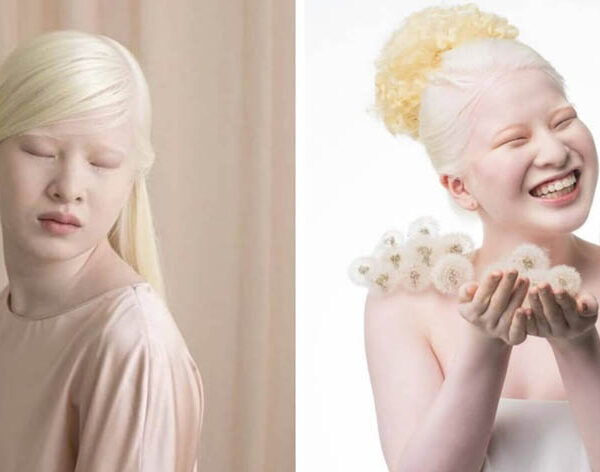
Xueli’s story reflects an alchemy of the human spirit: where adversity becomes a source of meaning, and what once was perceived as weakness becomes the foundation of courage and influence.
The abandonment that marked her infancy did not break her. Instead, it became part of the story that she now reshapes — proving that early trauma can become a bedrock for strength if met with care and opportunity.
She has taken the snow‑white skin that once made her vulnerable and turned it into a canvas of resilience, a visible testament to beauty, courage, and human dignity.
To Xueli, beauty is not a static trait defined by pigment or symmetry; it is a living force expressed through character, confidence, and the will to be seen on one’s own terms.
Beauty, for her, is found in speaking out against stigma, standing in the spotlight when society expects difference to hide, and extending a hand to those still in the shadows.
Her story is a reminder that we cannot choose how our beginnings unfold, but we do have agency over how our stories are told, reclaimed, and shared with the world.
Xueli Abbing is no longer a statistic of abandonment or a misunderstood outlier. Her life is a testament to the power of love, acceptance, and the enduring capacity of individuals to rewrite stigma.
She shows that when differences are cherished rather than feared, we uncover beauty that is enduring, rare, and deeply human — a beauty that challenges and enriches our understanding of the world.