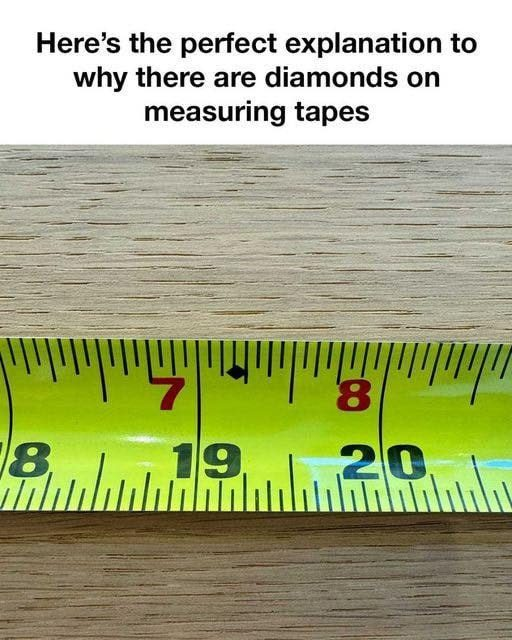
Most people know a measuring tape is used to measure lengths and distances. But have you ever noticed the small black diamond symbols that appear at regular intervals along the tape? These markings are not decorative—they serve a very practical purpose in construction and carpentry.
What Are the Black Diamonds?
The black diamonds, also called truss marks or black truss indicators, are usually spaced 19.2 inches apart. They help builders indicate where to place floor trusses or joists when dividing an eight-foot span into five equal parts. This spacing allows for efficient use of materials while maintaining structural integrity.
Why 19.2 Inches?
The spacing comes from the “eight-foot rule” in construction:
Eight feet = 96 inches
96 ÷ 5 = 19.2 inches
Placing supports every 19.2 inches ensures that five evenly spaced supports fit perfectly across an eight-foot section, which aligns with standard sizes of building materials like plywood and drywall.
Benefits of Black Diamond Markings
Using these markings provides several advantages:
Efficient Material Usage: Fewer joists or trusses are needed without compromising strength, saving cost.
Simplified Layout: Builders can quickly mark support placement without extra calculations.
Consistency: Standard spacing ensures uniformity, improving both stability and appearance.
Other Common Tape Measure Markings
Red Numbers or Boxes: Usually at 16-inch intervals for standard wall stud spacing.
Foot and Inch Markings: Standard numbers for measuring lengths in feet and inches.
Understanding all tape measure markings improves accuracy and efficiency in any building project.
Useful for DIY Projects
Black diamond marks aren’t just for professional builders. They’re also helpful for:
Deck building
Shed framing
Flooring installation
By using these marks, DIY enthusiasts can avoid mistakes, save time, and achieve a more professional-looking result.
Conclusion
The black diamonds on a measuring tape are more than decorative—they are practical guides for precise placement of structural supports. Paying attention to these subtle symbols can make both professional and DIY projects faster, more accurate, and structurally sound.