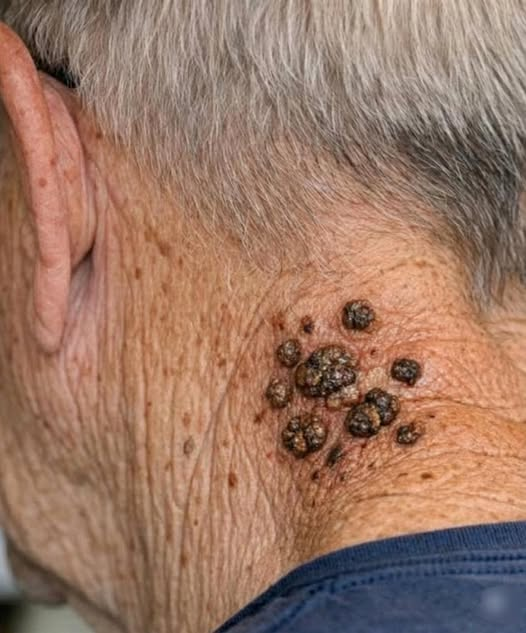
As people age, their skin commonly develops various spots and growths that can look unusual or concerning. While many of these changes are harmless, symptoms like itching or a dark appearance may cause understandable worry. In older adults, one of the most frequent causes of dark, waxy bumps—especially on areas like the neck—is seborrheic keratosis. These benign growths can appear gradually or seem to develop suddenly, often leading family members to question whether something serious is happening. Learning what these spots are and why they occur can ease anxiety and help guide proper care.
Seborrheic keratoses are non-cancerous skin growths that commonly affect people over 50. They may appear brown, black, or tan and often have a waxy, scaly, slightly raised surface. Many describe them as looking “stuck on,” similar to dried candle wax. They can develop singly or in clusters and range in size from tiny spots to larger patches over an inch wide. Although they can form almost anywhere except the palms and soles, they frequently show up on the chest, back, scalp, and neck.
These growths can sometimes resemble skin cancer, including melanoma, but there are important differences. Seborrheic keratoses usually have a consistent color and clearly defined borders. In contrast, cancerous lesions often have uneven edges, asymmetry, or multiple shades within the same spot. Even so, any growth that changes in size, shape, or color—or begins to bleed—should be evaluated by a healthcare professional to rule out more serious conditions.
Age plays a significant role in their development. Years of sun exposure and the natural aging process likely contribute, and genetics may increase susceptibility. While they can occur in all skin types, they may be more noticeable in lighter skin tones. Friction from clothing can also cause irritation or itching, particularly on the neck.
Doctors can typically diagnose seborrheic keratosis through visual examination, sometimes using a dermatoscope for a closer look. Treatment is usually unnecessary unless the growth becomes irritated or cosmetically bothersome. Options include freezing, gentle scraping, or laser removal. Attempting to remove them at home is discouraged, as picking or cutting can lead to infection. Encouraging your grandpa to discuss any new or changing spots with his doctor can provide reassurance and ensure appropriate care.