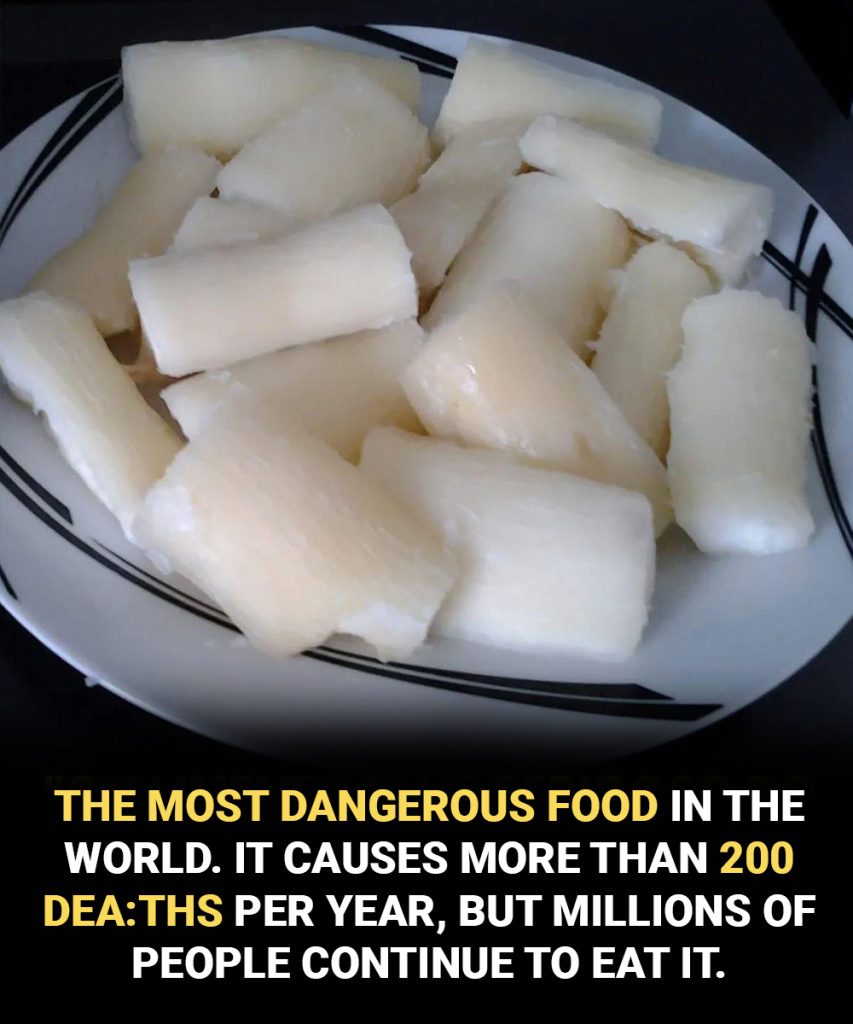
Understand how cassava can release cyanide and learn about the risks of improper preparation.
Cassava is found on tables from Brazil to Vietnam, but few know that, if improperly processed, the root can produce cyanide.
This toxic cassava, if poorly prepared, has already caused outbreaks and even the neurological disease konzo.
The good news? With simple care, the danger disappears and the flavor remains.
What makes cassava potentially dangerous?
The “bitter” variety concentrates cyanogenic glycosides.
When the root is grated or bitten, enzymes release cyanide — the same poison famous in spy stories.
Without proper boiling or fermentation, the compound remains in the food.
Why do cases of poisoning occur?
Lack of fuel or water for cooking in poor regions.
Emergency harvests during times of famine.
Lack of knowledge of traditional preparation techniques.
Konzo: A Little-Discussed Disease
In African communities with protein-poor diets, repeated consumption of poorly processed cassava leads to konzo.
Cyanide affects the nervous system, causing sudden weakness in the legs and possible permanent sequelae.
How to Make Cassava Safe
1. Peel thoroughly
The peel holds most of the toxins. Remove it completely.
2. Soak or Ferment
Grate or peel the root and cover it with clean water for 24–48 hours. In Northern Brazil, farinha d’água (cassava flour) follows this method.
3. Cook until tender
Boiling for at least 20 minutes breaks down the toxic molecules. Raw roots should never be consumed.
4. Combine with protein
The body detoxifies cyanide better if amino acids are available. Include eggs, fish, or legumes in the meal.
When does cassava become the villain?
Serious cases occur in extreme situations: prolonged drought, war, or poverty.
Where culinary traditions are alive, mistakes are rare.
Even so, it’s worth reinforcing good practices in public health manuals.
The versatile and nutritious side of the tuber
Rich in complex carbohydrates, gluten-free, and a source of soluble fiber, cassava yields soft cakes, wheat-free breads, and that classic fried cassava.
Processed correctly, it becomes an ally in energy-rich and accessible diets.
Conclusion
Cassava is not the enemy: the risk lies in a lack of knowledge.
Peeling, fermenting, boiling, and balancing the meal are enough to transform a potential poison into a safe, versatile, and delicious food—proof that tradition and science, together, protect the dish and health.