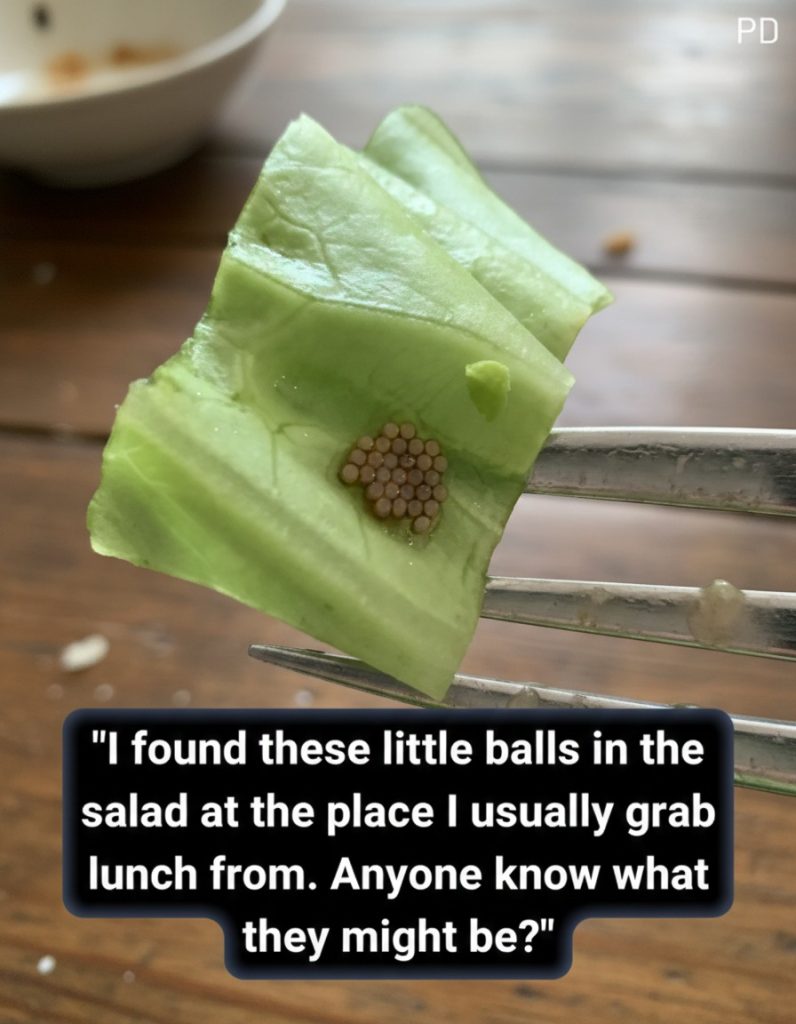
What began as a simple lunch break quickly turned into an unsettling surprise when a woman discovered something unusual in her salad. After sprinkling what she believed were quinoa grains over her greens, she noticed that the small brown clusters looked slightly different from the rest of the ingredients. On closer inspection, she realized the clusters were attached to a lettuce leaf and were not grains at all. Recognizing that they were likely insect eggs rather than food, she immediately stopped eating and alerted others nearby. What started as an ordinary meal quickly became an unexpected lesson in food awareness.
Although such discoveries can be alarming, they are not entirely uncommon. Leafy vegetables are grown outdoors, where insects naturally live and reproduce. It is not unusual for insects to lay eggs on the underside of leaves, particularly in tightly folded greens like romaine, spinach, or cabbage. Even with modern harvesting, cleaning, and packaging systems, tiny natural remnants can sometimes make their way into kitchens and restaurants. Produce travels from farms to processing facilities and then to stores or food service establishments, passing through multiple stages, and while quality control standards are generally high, no system is completely flawless.
In most cases, accidental contact with insect eggs poses minimal health risk. Many species are harmless, and stomach acid typically neutralizes organic material that might be ingested unknowingly. However, the idea of consuming something unintended can understandably cause distress. The key concern is not usually toxicity but hygiene and peace of mind.
If a situation like this occurs while dining out, the best course of action is to stop eating the dish and politely notify restaurant staff. Reputable establishments typically respond promptly by apologizing, replacing the meal, or offering a refund. Calm communication allows the restaurant to investigate its supply chain and preparation methods to reduce the likelihood of a repeat incident.
At home, careful food preparation remains the most effective prevention. Even produce labeled as “pre-washed” benefits from an extra rinse under cool running water. Separating leaves, checking folds and creases, and gently patting items dry can help remove dirt, insects, or eggs that may be hidden from view. Taking a few extra moments to inspect fresh produce helps ensure that meals remain both safe and enjoyable.