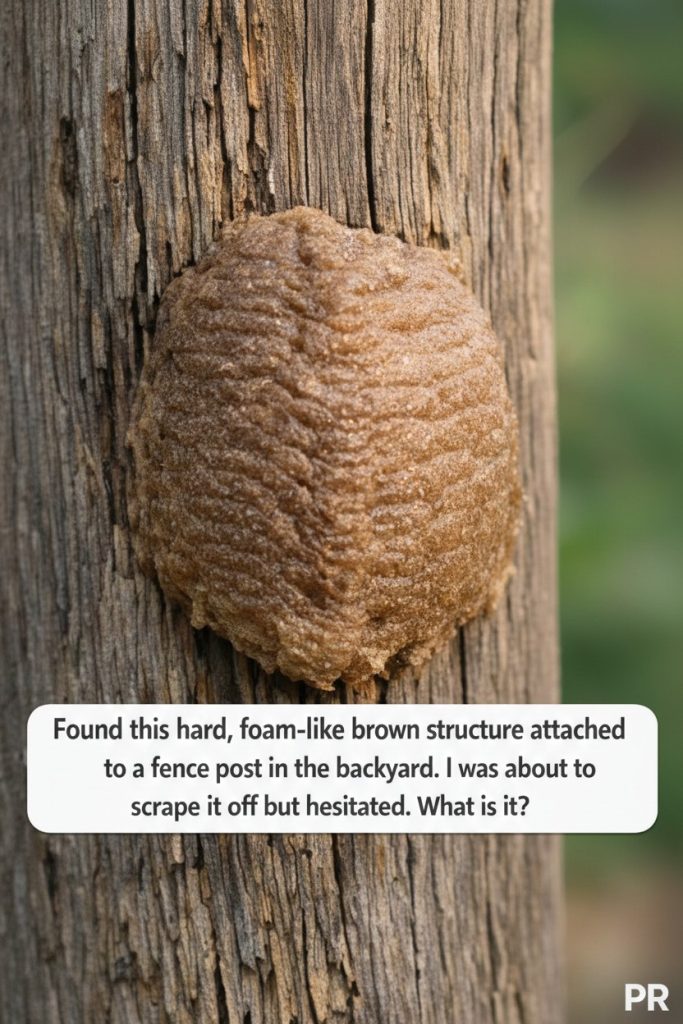
Coming across a strange structure in your backyard can spark both curiosity and concern. Maybe you’ve noticed a firm, brown, foam-like mass clinging to a fence post or tree branch. At first glance, it might seem suspicious—something invasive or even dangerous. But before removing it, it helps to understand what it likely is.
In many cases, that odd structure is a praying mantis egg case, called an ootheca. It may look unusual, but it represents one of nature’s most effective survival strategies—and it plays an important role in maintaining a healthy garden ecosystem.
The Curious “Foam” That Catches Attention
A mantis egg case typically appears tan to light brown, with a rough, slightly foamy texture. It’s usually about 1–2 inches long and attached securely to twigs, stems, fence posts, or garden furniture. Its strange appearance is no accident. The hardened casing protects developing eggs from cold temperatures, moisture, and predators throughout the winter.
The Hunter Behind It
Praying mantises belong to the order Mantodea. Known for their elongated bodies and folded, grasping forelegs, they are skilled predators that feed on flies, caterpillars, crickets, and other plant-damaging insects. Gardeners often appreciate mantises because they naturally reduce pest populations without chemicals.
Inside the Ootheca
In late summer or fall, a female mantis secretes a frothy substance around her eggs, which quickly hardens into a durable shell. Inside, dozens—or even hundreds—of eggs remain protected through winter. When spring temperatures rise, tiny mantises hatch and disperse into nearby plants, ready to hunt almost immediately.
Harmless and Beneficial
Despite its unusual look, a mantis egg case is harmless to people and pets. Removing it disrupts the life cycle of a beneficial insect. Unless it’s in a location where it may be damaged, it’s best to leave it undisturbed.
What first appears strange may actually be a sign your yard supports thriving wildlife—proof that nature is quietly at work just outside your door.