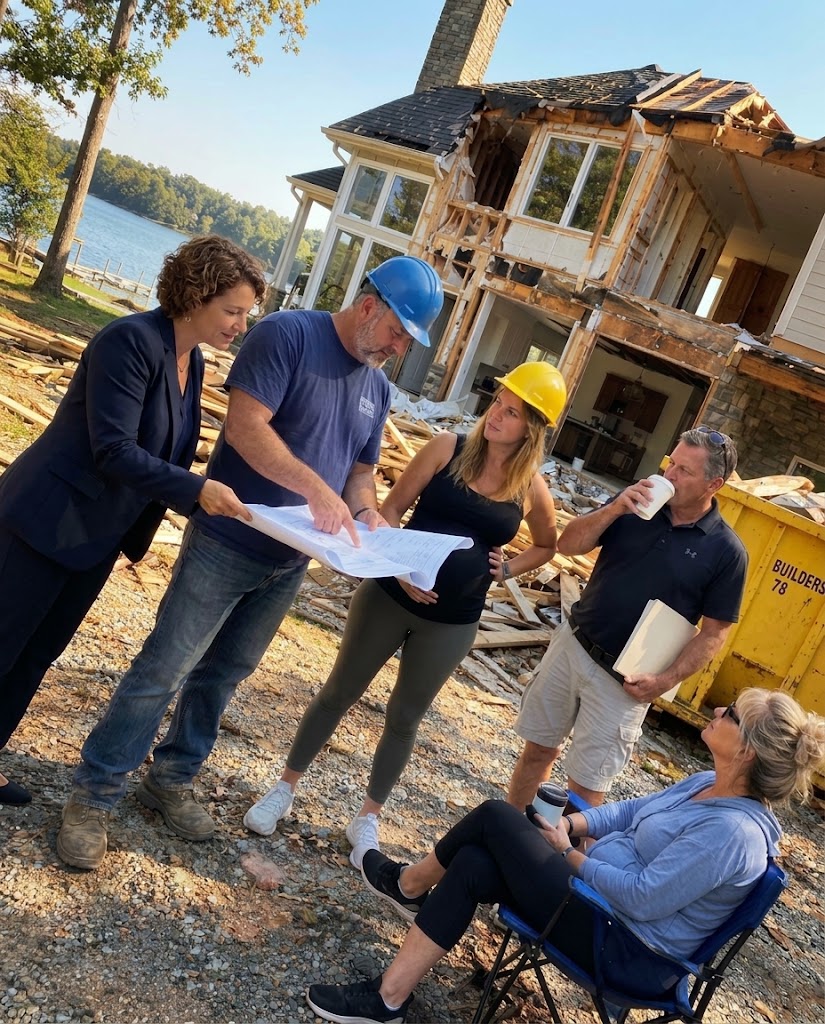
The sound of heavy machinery reached me before I could see the house. A yellow dumpster sat across my flower beds, a construction van blocked the porch, and the entire east wall of my lake house had been opened beneath a flapping blue tarp. My sunroom—the place where I drank coffee while morning light stretched across the floor—was already reduced to broken timber, glass, and insulation. My father stood beside the rubble holding blueprints, my mother watched from a lawn chair with iced tea in her hand, and my brother Marcus was laughing with the contractor. When I demanded to know what they were doing, Marcus looked annoyed rather than ashamed. Then my father calmly explained that Marcus and his pregnant girlfriend would be moving into my house and that my parents planned to build living quarters over the garage so they could join them. Apparently, they had held a “family meeting” without me and decided what should happen to property that belonged entirely to me.
For seven years I had financed nearly every crisis in their lives. I bought my parents a bungalow when their credit prevented them from qualifying on their own, paid the mortgage and property taxes, replaced the roof, covered medical bills, repaired cars, funded groceries, and repeatedly rescued Marcus whenever another job or apartment arrangement fell apart. Even a vacation to Cabo eventually became my responsibility because, according to him, “family helps family.” The lake house had been the one thing I kept separate—a modest fixer-upper two hours from the city that existed only because I wanted somewhere quiet that no one else could claim. I had given my parents an emergency key and made the boundary explicit. Standing in the wreckage, I discovered how meaningless that boundary had become to them. The contractor showed me a work authorization bearing my forged signature and a purported power of attorney naming my father as authorized to act for me. Then Dad casually admitted that he had charged the $10,000 construction deposit to the emergency credit card I had once trusted him to use.
I stopped arguing. Instead, I took copies of the documents directly to the construction company, proved ownership, and informed the owner that I had authorized neither the work nor the power of attorney. He shut the project down immediately and provided copies of everything my family had submitted. A lawyer later reviewed the forged authorization, the unauthorized charge, and the structural damage and told me the situation had moved well beyond an ordinary family dispute. I initially chose to pursue repayment and property remedies before deciding whether to make any criminal complaint. Then came the harder issue: the bungalow where my parents had been living rent-free for years was also legally mine. After reviewing the occupancy arrangement and applicable notice requirements, my attorney prepared formal notice terminating their right to remain there, along with a demand seeking reimbursement for approximately $25,000 in unauthorized charges and damage. My family expected another argument followed by another check. Instead, they received paperwork.
At the bungalow, they arranged the living room like an intervention and told me they were willing to forgive my “outburst” if I restarted construction and paid the next installment. I let them finish. Then I placed the damage assessment, bank records, forged authorization, contractor documents, and formal notice on the table one by one. My father insisted I owed them because he had raised me; Marcus accused me of choosing property over family; my mother asked where they were supposed to go. For the first time, none of those sentences changed my decision. Through counsel, I pursued repayment and enforced my ownership rights rather than continuing the financial arrangement that had supported them for years. The unauthorized project remained stopped, my father eventually reimbursed the disputed losses, and my parents moved into housing they could afford on their own while Marcus and his girlfriend relocated closer to her family. None of them believed the outcome was fair. What changed was that their belief no longer controlled my bank account.
Months later, I hired a new contractor and rebuilt the sunroom exactly the way I had always imagined it. No nursery designed by Marcus, no apartment over the garage, no rooms allocated by a family committee that never bothered to ask the owner. Just glass, pale wood, wide windows, and the lake beyond them. I still mourn the family relationship I wanted, especially when I see other daughters sitting comfortably with their mothers and realize how different things might have been. But the quiet at the lake no longer feels lonely. It feels earned. Some mornings I sit with coffee while mist lifts from the water and sunlight slowly fills the room they tried to take from me. The greatest thing I rebuilt was not the sunroom. It was the belief that generosity can remain generosity only when the person giving it is still allowed to say no.
