Sleep is essential for overall health because the body uses nighttime rest to repair tissues, balance hormones, restore energy, strengthen immunity, and process memories. While sleep duration matters, your sleeping position can also affect breathing, digestion, circulation, and muscle comfort. As the article explains, “Your sleeping position influences far more than comfort—it can affect breathing, digestion, circulation, and even how refreshed you feel in the morning.”
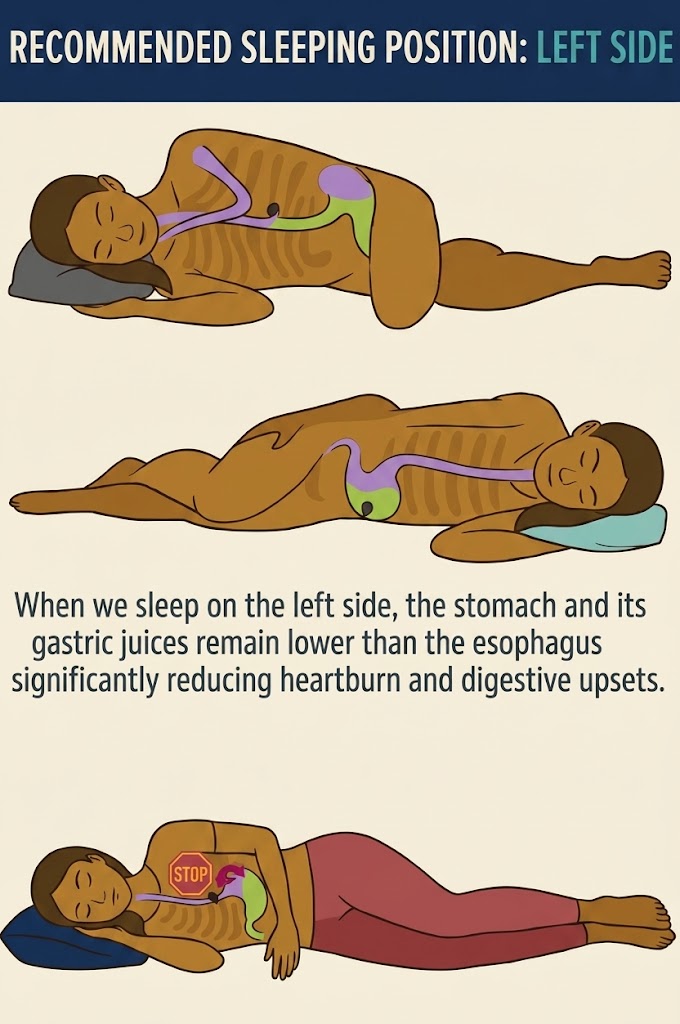
The difference between sleeping on your left or right side is especially important for people with acid reflux. Because the stomach sits mainly on the left side, sleeping on the left can help keep stomach acid below the esophageal valve. Right-side sleeping may allow acid to move toward the esophagus, potentially making heartburn and nighttime reflux worse. People with frequent heartburn or GERD may benefit from trying the left side, avoiding large meals before bed, and elevating the head of the bed.
Sleep position also affects breathing. Sleeping on your back can allow the tongue and soft tissues to narrow the airway, increasing snoring and sleep apnea symptoms. Side sleeping, on either side, generally helps keep the airway more open. During pregnancy, left-side sleeping is often recommended because it can support circulation and reduce pressure on a major vein.
Comfort matters too. Side sleeping can sometimes cause shoulder, hip, neck, or arm discomfort. A supportive pillow, a pillow between the knees, and a suitable mattress can reduce pressure and improve spinal alignment.
Most importantly, there is no universally “perfect” position. If you sleep comfortably, wake refreshed, and have no troubling symptoms, there may be no reason to change. As the article states, “Your ideal position depends on” your health, body, comfort, and sleep setup. Pay attention to persistent heartburn, loud snoring, pain, numbness, or daytime tiredness, and speak with a healthcare professional when necessary.