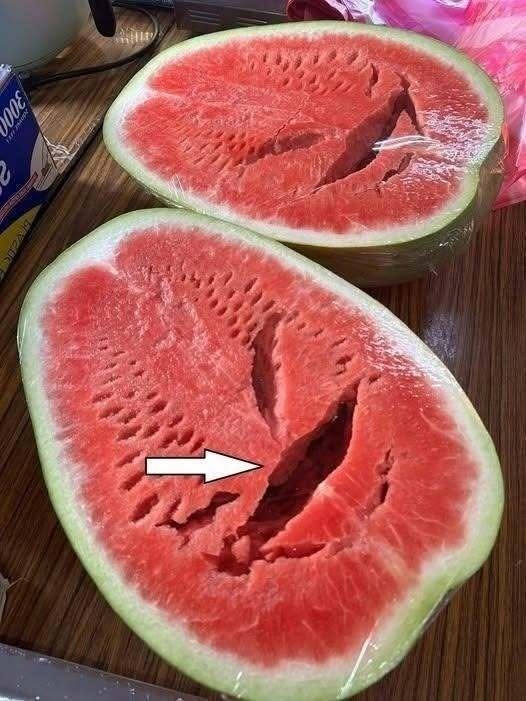
Cutting open a watermelon should be a refreshing experience, but occasionally people discover internal cracks, hollow spaces, or unusual patterns inside the fruit. While these imperfections may seem surprising, they are often the result of natural growing conditions rather than a sign that the watermelon is unsafe to eat.
Watermelons, like many fruits, develop differently depending on weather, soil conditions, and growing environments. Factors such as changes in rainfall, periods of rapid growth, temperature fluctuations, and the fruit’s natural ripening process can all influence its internal appearance. As a result, some watermelons may develop small cracks or hollow areas while remaining perfectly edible.
These variations are generally considered quality-related characteristics rather than food safety concerns. In many cases, a watermelon with minor internal cracking simply has a different texture than expected. Some may be slightly less juicy, while others may have a softer or more fibrous center.
Discussions about fruit-growing practices occasionally mention plant growth regulators, which are agricultural tools used in some regions to support crop development. Agricultural products are subject to regulations that vary from country to country, and approved farming methods are monitored by relevant authorities to help ensure food safety standards are met.
For consumers, the most useful approach is to focus on selecting fresh, high-quality fruit. When shopping for a watermelon, look for one that feels heavy for its size, which often indicates good water content. A creamy yellow field spot—the area where the melon rested on the ground—can also suggest that the fruit had adequate time to ripen naturally.
The rind should appear firm and free from major damage. Many shoppers also prefer watermelons with a dry stem, which can indicate the fruit was allowed to mature before harvest.
Once the watermelon is cut open, simple observations can help determine freshness. Fresh watermelon typically has a pleasant, sweet aroma, a crisp texture, and vibrant flesh. These characteristics are often better indicators of quality than minor cosmetic differences inside the fruit.
Small internal cracks or hollow sections are not uncommon and do not automatically mean the watermelon should be discarded. Many fruits with these features remain enjoyable to eat and retain their refreshing taste.
However, as with any fresh produce, signs of spoilage should not be ignored. If a watermelon develops an unpleasant odor, unusual discoloration, mold growth, excessive softness, or a fermented taste, it is best to discard it. These are common indicators that the fruit is no longer fresh.
Understanding the difference between natural imperfections and genuine spoilage can help consumers make confident decisions. Fruits and vegetables rarely look identical, and variations in appearance are often a normal part of agriculture.
Watermelon continues to be one of the most popular summer fruits because of its naturally sweet flavor, high water content, and versatility. Whether enjoyed fresh, blended into beverages, or added to fruit salads, it remains a refreshing choice for many households.
The next time you notice an unusual pattern inside a watermelon, remember that appearance alone does not determine quality. By using simple observations such as smell, texture, freshness, and overall condition, you can make informed choices and enjoy your fruit with confidence.
Knowledge and practical food-handling habits are often the best tools for evaluating produce. With thoughtful selection and proper storage, watermelon can remain a delicious and enjoyable part of a balanced diet throughout the season.