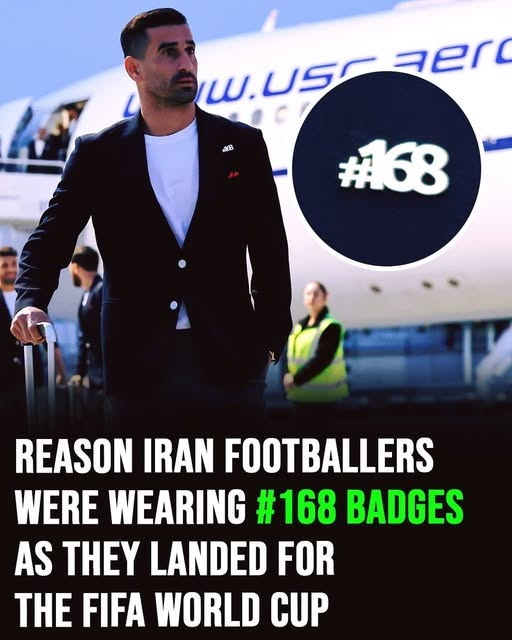
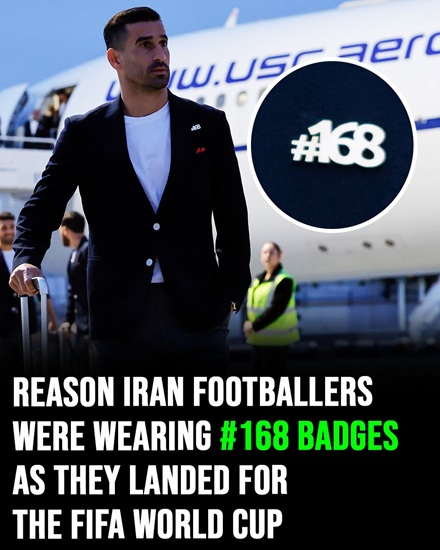
Iran’s participation in the FIFA World Cup has already attracted significant attention due to ongoing political tensions and broader international controversy surrounding the tournament’s location and timing. However, recent developments involving the national team have shifted focus from the pitch to a symbolic gesture made off the field. Reports indicate that members of the Iranian squad arrived wearing jacket badges marked with the hashtag “#168,” a detail that quickly sparked global discussion among fans, media outlets, and political observers.
The tournament itself, hosted across venues in the United States and other locations, has been surrounded by heightened diplomatic sensitivity. Iran’s matches are scheduled to take place in cities including Los Angeles and Seattle, further adding to the complexity of its participation.
Visa Uncertainty and Team Restrictions
Leading up to the tournament, there was uncertainty regarding whether Iranian players and staff would be granted entry visas to the United States. After several weeks of delays and diplomatic review, visas were eventually issued only days before the team’s first scheduled match.
However, according to reports cited by Reuters, not all members of the Iranian delegation received approval. Several key personnel, including administrative staff and technical team members, were reportedly denied entry.
Among those affected were individuals described as part of the team’s support structure, including analysts, media staff, and other federation representatives. As a result, the Iranian team adjusted its operational base for the tournament, with arrangements made for accommodation in Tijuana, Mexico.
This logistical adjustment highlighted the broader challenges faced by the delegation during its participation in the competition.
Arrival in Mexico and the Appearance of #168
When the squad arrived in Tijuana, observers noticed a striking and unexpected detail: several players were wearing badges displaying the number “#168” on their jackets.
The symbol immediately drew attention from media outlets and spectators, prompting questions about its meaning and significance.
According to statements attributed to Iranian officials, the badge was intended as a tribute connected to a tragic event involving the deaths of 168 children. Reports suggest the gesture was meant to honor their memory and draw attention to the incident referenced by Iranian authorities.
The appearance of the badges added a new emotional and political dimension to the team’s arrival, quickly becoming a subject of international coverage.
Competing Narratives and Uncertainty
The meaning behind the referenced tragedy has been widely discussed and interpreted differently depending on the source. Some reports, citing various officials and investigations, have presented conflicting accounts regarding responsibility and circumstances surrounding the incident.
At this time, no universally accepted conclusion has been established publicly by all involved governments or institutions, and the topic remains part of ongoing international debate.
Because of this, the appearance of the “#168” symbol has been interpreted in multiple ways, depending on political perspective and media framing.
FIFA Regulations and Potential Implications
The display of symbols or messages during official football-related activities is governed by FIFA regulations, which generally prohibit political, religious, or personal statements on team equipment.
These rules are designed to maintain neutrality and prevent political messaging during official competition environments. FIFA has previously enforced sanctions in cases where such guidelines were violated.
However, in this case, the situation remains unclear, as the badges were reportedly observed outside of official match play. This has led to debate over whether the action falls within regulated competition boundaries or outside them.
As of now, FIFA has not issued an official public statement regarding the Iranian team’s badges or whether any review will take place.
Global Reactions and Ongoing Discussion
The appearance of the #168 badges quickly spread across international media platforms, generating discussion among fans, analysts, and commentators.
Some observers view the gesture as a humanitarian expression of remembrance, while others interpret it through a political lens given the broader geopolitical context surrounding the tournament.
The lack of immediate clarification from governing bodies has further fueled speculation and debate online.
Meanwhile, attention has also turned toward global political figures, including U.S. leadership, although no official comments have been made regarding the situation at this time.
A Story Extending Beyond Football
As the World Cup approaches its opening matches, the focus on Iran’s symbolic gesture highlights how major sporting events often intersect with global politics and emotional narratives.
What began as a simple pre-match arrival detail has evolved into a wider discussion involving memory, interpretation, and international regulation.
Regardless of interpretation, the situation underscores how actions taken off the field can rapidly gain global significance during high-profile sporting events.
The story continues to develop as teams finalize preparations and the tournament officially begins.