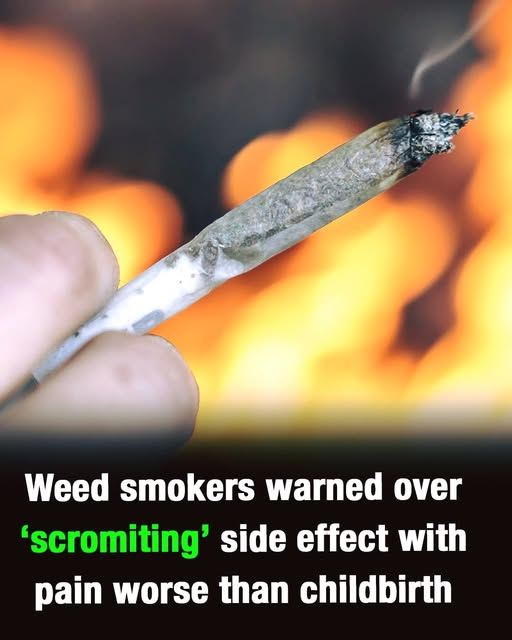
Doctors and emergency medicine specialists have been reporting an increasing number of hospital visits linked to a condition known as Cannabis Hyperemesis Syndrome, or CHS. The disorder is associated with chronic or heavy cannabis use and is characterized by repeated episodes of severe nausea, vomiting, and abdominal discomfort. Although cannabis is often associated with anti-nausea effects in some medical contexts, CHS presents a paradoxical reaction in certain long-term users.
Medical professionals note that the condition is still being studied, and its exact biological mechanism is not yet fully understood. Over the past several years, emergency departments in multiple countries, particularly in North America, have documented a growing number of cases. Patients often arrive experiencing intense vomiting episodes, dehydration, and significant abdominal pain requiring urgent care.
In many cases, individuals affected by CHS report repeated visits to emergency services before receiving a correct diagnosis. Because symptoms resemble other gastrointestinal disorders, the condition can initially be misidentified as food poisoning, viral illness, or cyclic vomiting syndrome.
One of the most distinctive features reported by patients is the temporary relief of symptoms through hot showers or baths. Medical experts believe this behavior may help regulate the body’s temperature or temporarily interrupt nausea signaling pathways, although the exact reason remains uncertain.
Due to this repeated observation, clinicians sometimes consider the preference for hot bathing as a diagnostic clue. However, this behavior alone is not sufficient for diagnosis and must be evaluated alongside cannabis use history and symptom patterns.
Healthcare providers describe CHS as occurring primarily in individuals with long-term, frequent cannabis consumption. However, susceptibility varies significantly, and not all heavy users develop the condition, suggesting individual biological differences may play a role.
Researchers have proposed that CHS may be linked to dysregulation of the endocannabinoid system, which is involved in regulating nausea, digestion, and stress responses. Chronic exposure to cannabinoids may, in some cases, disrupt normal receptor activity.
Symptoms of CHS typically develop in cycles, with periods of severe vomiting followed by temporary recovery. These cycles may repeat if cannabis use continues, often leading to recurring emergency visits and worsening dehydration over time.
The acute phase of CHS can last anywhere from several hours to a few days. During this period, patients may be unable to keep food or fluids down, increasing the risk of electrolyte imbalance and kidney stress if untreated.
Standard anti-nausea medications are often reported to be less effective in CHS cases. As a result, medical teams may focus on intravenous fluids, symptom management, and supportive care while ruling out other serious conditions.
In some hospital settings, clinicians have explored alternative symptom-relief methods such as topical capsaicin cream applied to the abdomen. This approach is based on the idea that it may influence certain nerve receptors involved in pain and nausea perception.
Medications such as haloperidol have also been used in some emergency cases under medical supervision. However, treatment approaches can vary widely, as there is currently no single FDA-approved therapy specifically for CHS.
Medical experts consistently emphasize that the most effective known intervention is complete cessation of cannabis use. Patients who stop using cannabis generally experience a reduction in symptoms and a lower risk of recurrence.
However, stopping cannabis use can be challenging for some individuals, particularly those with long-term dependence. In such cases, relapse may trigger the return of symptoms, reinforcing the cycle of illness.
Studies and clinical observations suggest that CHS is more likely to occur in individuals who began using cannabis at a younger age and who use it frequently or over extended periods of time.
Despite this association, researchers stress that CHS remains relatively uncommon compared to the overall number of cannabis users. Many people who use cannabis regularly never experience these symptoms.
Public health researchers continue to investigate why only certain individuals develop CHS. Possible factors include genetic predisposition, differences in metabolism, or variations in how cannabinoid receptors respond over time.
Emergency physicians have noted that awareness of CHS has improved in recent years, leading to faster diagnosis in some hospitals. However, delayed recognition still occurs, particularly when patients are not initially forthcoming about cannabis use.
Because of this, medical professionals encourage open communication between patients and healthcare providers. Accurate reporting of substance use history is considered essential for proper diagnosis and treatment planning.
Recent research has also examined trends in emergency department visits related to CHS. Some studies suggest an increase in reported cases, particularly in regions where cannabis use has become more widespread or legalized.
However, experts caution that improved awareness and diagnostic coding may also contribute to the apparent rise in cases, making it difficult to determine exact prevalence trends.
In clinical literature, CHS is now recognized as a distinct condition associated with chronic cannabinoid exposure. It is included in international diagnostic classification systems used by healthcare providers to standardize reporting.
The inclusion of CHS in formal medical coding systems has helped researchers collect more consistent data on its frequency and outcomes. This development is considered important for future public health studies.
Despite growing recognition, many aspects of CHS remain under investigation, including why symptoms resolve only after prolonged abstinence and why certain individuals are more vulnerable than others.
Public health experts emphasize that education about CHS is important, particularly among frequent cannabis users, so that early symptoms can be recognized and medical care sought promptly.
While cannabis continues to be studied for both medical and recreational use, conditions like CHS highlight the importance of understanding potential risks associated with long-term or heavy consumption.
As research continues, healthcare providers aim to improve diagnostic accuracy and develop more effective treatment strategies. For now, prevention through reduced or discontinued use remains the most reliable approach.
Overall, Cannabis Hyperemesis Syndrome represents a growing area of clinical attention within emergency medicine. Increased awareness among both patients and clinicians is seen as key to reducing repeated hospital visits and improving outcomes.