Psychotherapist John Gartner is among several mental health professionals who have publicly expressed concern about the behavior and public statements of Donald Trump. Over the past several years, critics of Trump have repeatedly questioned his temperament, decision-making style, and communication patterns, especially during periods of intense political tension and international conflict. These concerns became more visible after Trump returned to the White House, as political opponents.
Commentators, and some mental health experts argued that his speeches and social media activity appeared increasingly aggressive and unpredictable. Supporters, however, strongly rejected those claims, insisting that Trump’s behavior reflects his political style rather than any medical condition. It is important to note that there is currently no public medical evidence proving that Donald Trump suffers from dementia or any other cognitive illness.
No official diagnosis confirming such claims has been released by Trump’s physicians or by any recognized medical authority connected to the White House. Dr. Gartner, who founded the organization Duty To Warn, has nevertheless continued speaking publicly about what he believes are dangerous behavioral patterns. Duty To Warn is a group made up of mental health professionals and private citizens who argue that experts have an ethical obligation to warn society if they believe a public figure may pose a serious risk.
During an interview on SiriusXM radio with political commentator Dean Obeidallah, Gartner argued that Trump’s public conduct may indicate cognitive decline. According to Gartner, he believes Trump demonstrates signs consistent with severe narcissism and possible dementia-related deterioration affecting judgment and impulse control.
Gartner specifically focused on what he described as “grandiose” behavior. He referenced social media posts and public remarks in which Trump compared himself to historical figures or portrayed himself in highly symbolic ways. Critics have often cited these moments as examples of Trump presenting himself as uniquely powerful or unfairly persecuted.
One example discussed during the interview involved imagery shared online that some critics interpreted as comparing Trump to religious or heroic figures. Gartner claimed such content reflected exaggerated self-importance and argued that it demonstrated what he viewed as increasingly extreme public messaging from the president.
The psychotherapist also referenced Trump’s repeated comments describing himself as one of the greatest presidents in American history. Throughout his political career, Trump has frequently praised his own achievements, spoken about deserving major honors, and criticized opponents in unusually direct and personal language.
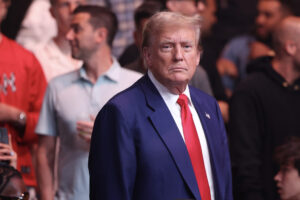
Supporters of Trump often argue that these statements are part of his long-established public persona rather than evidence of illness. They point out that Trump has used provocative rhetoric for decades, both before and during his political career, particularly as a businessman, television personality, and political candidate.
Gartner, however, suggested that the issue becomes more serious because Trump commands one of the world’s largest military forces. He expressed concern that any leader with immense military authority should demonstrate emotional stability, careful judgment, and restraint when making decisions affecting global security.
During the interview, Gartner also referenced comparisons Trump has occasionally made between himself and famous historical leaders. According to Gartner, Trump’s admiration for strong and dominant rulers raised concerns about how he views political power and international influence in modern society.
The psychologist specifically mentioned historical figures such as Julius Caesar, Napoleon Bonaparte, and Alexander the Great. These leaders are remembered both for their military achievements and for expanding empires through conquest, war, and centralized authority across large territories.
Gartner argued that modern presidents possess military capabilities far beyond anything available in ancient or nineteenth-century history. He warned that reckless leadership combined with modern weapon systems could theoretically create catastrophic global consequences if major international conflicts escalated uncontrollably.
One of Gartner’s most controversial remarks came when he predicted that Trump could potentially “kill more people than Hitler.” That statement received strong backlash online, with many critics accusing Gartner of using inflammatory language that dramatically exaggerated the situation and intensified political division.
Historians widely recognize World War II and the atrocities committed under Adolf Hitler as among the deadliest and darkest chapters in modern history. Because of this, comparisons involving Hitler are often considered extremely sensitive and highly controversial in public discourse.
Many political analysts argued that Gartner’s comments reflected opinion rather than evidence-based medical analysis. Mental health professionals have long debated whether it is ethical to publicly speculate about the psychological condition of political leaders without conducting direct clinical examinations or obtaining consent.
The American Psychiatric Association has guidelines commonly referred to as the “Goldwater Rule,” which discourages psychiatrists from diagnosing public figures they have not personally evaluated. Supporters of the rule believe it protects professional standards and prevents political misuse of psychiatric language.
At the same time, some experts argue that unusual public behavior from powerful leaders can legitimately raise public-interest concerns, particularly when national security decisions are involved. This debate has intensified in recent years as political polarization and social media controversies continue growing worldwide.
Trump himself has repeatedly denied accusations regarding his mental fitness. He has often responded by describing himself as mentally sharp and physically healthy. During previous campaigns and interviews, he publicly referenced cognitive tests he claimed to have passed successfully.
The White House has also released medical reports over the years stating that Trump remains fit to serve as president. His allies frequently accuse critics and media organizations of exaggerating isolated incidents in order to damage him politically ahead of elections and major policy debates.
Meanwhile, opponents of Trump continue pointing to controversial speeches, aggressive rhetoric, verbal mix-ups, and social media activity as reasons for concern. They argue that the behavior of world leaders deserves close public scrutiny because presidential decisions can affect millions of people globally.
The broader discussion surrounding Trump’s behavior reflects the deep political divisions currently shaping American society. For supporters, Trump represents strength, defiance, and resistance against political elites. For critics, he symbolizes instability, polarization, and the growing normalization of extreme political rhetoric.
Although Dr. Gartner’s statements attracted major attention online, they remain personal opinions rather than medically confirmed conclusions. At present, there is no verified public evidence proving that Donald Trump suffers from dementia or any mental illness preventing him from carrying out presidential duties.
What remains undeniable is that conversations about leadership, mental fitness, and political responsibility continue influencing modern politics more than ever before. In an era shaped by social media, nonstop news coverage, and global uncertainty, even controversial opinions can quickly become worldwide debates.
