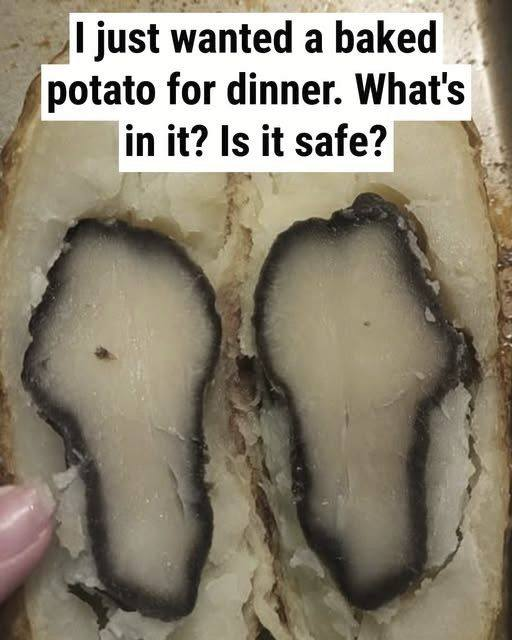
Cutting open a potato and discovering a black ring or dark patch inside can be surprising. From the outside, the potato may look completely normal, which makes the discoloration seem unexpected. Many people immediately assume the potato has spoiled or become unsafe to eat, but in most cases, the explanation is much simpler and less concerning.
One of the most common reasons for these dark rings is internal bruising. Potatoes may appear durable on the outside, but their inner tissue is sensitive to pressure and impact. During harvesting, packaging, transport, or storage, small bumps and pressure can damage the inside without leaving visible marks on the skin.
Another possible cause is storage conditions. Potatoes keep best in cool, dry, and well-ventilated places. When stored in environments that are too cold or lack airflow, internal changes may occur. In some cases, the center can darken due to reduced oxygen circulation inside the potato, creating dark rings or patches.
Natural changes inside the potato can also contribute to discoloration. Like many fruits and vegetables, potatoes react to stress over time. Temperature changes and oxidation may affect internal tissues and create gray, black, or purplish areas. This does not automatically mean the potato is spoiled.
In most situations, a potato with a dark ring is still usable. If the potato feels firm, smells normal, and shows no signs of mold, slime, or widespread decay, the affected section can usually be trimmed away before cooking. The remaining portion is often fine to prepare and eat.
However, there are times when a potato should not be used. If it has become soft, has an unpleasant odor, contains extensive discoloration throughout, or shows green coloring, it is better to discard it. These signs may indicate deeper quality issues that affect taste and freshness.
Finding a black ring inside a potato can look alarming, but appearance alone does not always tell the full story. A quick inspection of texture, smell, and overall condition is usually enough to decide whether the potato can still be enjoyed safely.