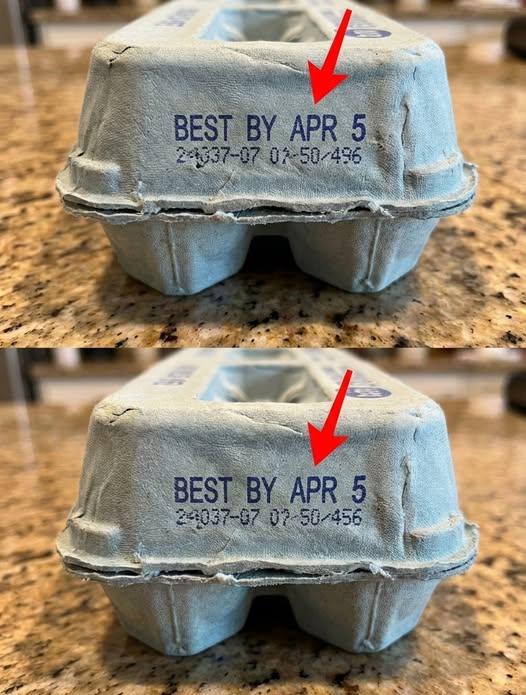
You’ve seen it—probably a hundred times. That mysterious three-digit number stamped on the side of your egg carton. Maybe you thought it was a batch code, a price lookup, or just random packaging noise.
But that number? It’s actually your best clue to freshness and safety—and ignoring it could be why your quiche left everyone feeling “off.”
Let’s decode what those numbers really mean—and how to use them to avoid foodborne illness.
The Three-Digit Number: It’s the Julian Date!
That number (usually between 001 and 365) is the Julian date—the day of the year the eggs were packed.
001 = January 1
032 = February 1
365 = December 31
So if your carton says “120”, the eggs were packed on April 30 (the 120th day of the year).
Important: This is NOT the expiration date—it’s the pack date.
How Long Are Eggs Safe to Eat?
According to the USDA:
Raw eggs in the shell are safe for 3–5 weeks after the pack date—even if the “sell-by” date has passed.
Always refrigerate eggs at or below 40°F (4°C). Room temperature drastically shortens shelf life.
Critical tip: The “sell-by” or “best-by” date on the carton is not a safety cutoff—it’s for store inventory. The Julian date is what matters.
Why Your Quiche Made Everyone Sick:
Why Your Quiche Made Everyone Sick
Even if eggs look and smell fine, they can harbor Salmonella—a bacteria that causes nausea, vomiting, cramps, and diarrhea.
Salmonella doesn’t change an egg’s appearance, smell, or taste.
And it’s not killed by cracking or mixing—only by proper cooking (to 160°F/71°C).
If your eggs were old, improperly stored, or from a contaminated batch, even a baked quiche might not have reached a high enough internal temperature to kill the bacteria.
Fact: Salmonella can be inside the egg before the shell forms—so washing the shell won’t help.
How to Use the Julian Date Safely
Find the number on the short side of the carton (often near the USDA grade mark).
Calculate the pack date (use a Julian date converter online if needed).
Use within 3–5 weeks of that date.
When in doubt, toss it out—especially for dishes like quiche, hollandaise, or tiramisu that use undercooked eggs.
Bonus: Other Egg Carton Codes Decoded
Marking
What It Means
Grade AA, A, or B
Quality (AA = firmest whites, roundest yolks)
“Organic”
Hens fed organic feed, no antibiotics, outdoor access
“Cage-Free”
Hens not in cages—but may still be indoors
“Pasture-Raised”
Hens roam outdoors (most humane, best nutrition)
Plant code (e.g., P-1234)
Identifies the farm (can be traced in recalls)
Tips to Prevent Egg-Related Illness
Never eat raw or undercooked eggs (unless pasteurized)
Cook egg dishes to 160°F (use a thermometer for quiche, custard, etc.)
Don’t leave eggs out >2 hours (1 hour if room temp >90°F)
Wash hands and surfaces after handling raw eggs
Buy eggs with clean, uncracked shells
The Bottom Line
That little number isn’t just packaging filler—it’s a freshness timestamp that could save you from a sickening dinner party disaster.
So next time you grab a carton, check the Julian date. It takes two seconds… and might just keep your guests happily full instead of uncomfortably ill.
“Freshness isn’t just about taste—it’s about safety.”
Have you ever had a food scare with eggs? Did you know about the Julian date before? Share your story below—we’re all learning to cook safer together!